
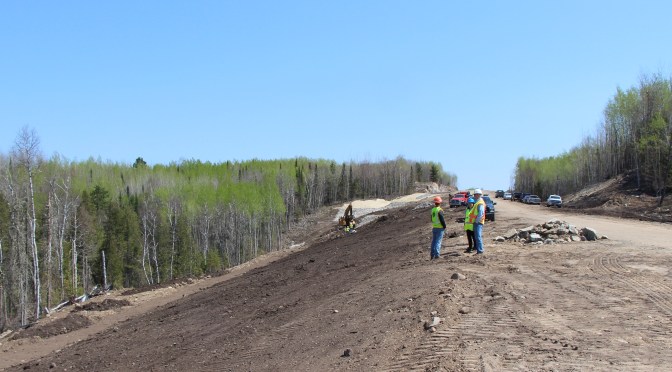
Vegetated roadsides in Minnesota help control stormwater quantity and pollutant levels before the water reaches lakes, streams and communities. Because leftover soil from road construction generally does not support filtration and plant growth, MnDOT and local engineers have continued research to identify organically rich, locally available industrial by-products to amend the soil. Engineered soil mixes with materials such as dredge sand, coarse street sweepings and ash sawdust show high potential for providing a sustainable, efficient solution.
Continue reading Reusing Local By-Products to Create Sustainable Roadside SoilTag Archives: soil

Reusing Local Byproducts in Sustainably Designed Soils
After road construction, soil in revegetation areas must retain adequate stormwater and provide stable embankments along the road. Revegetation can be challenging due to thin topsoil, and it often requires importing healthy organic soil and exporting excess construction soil generally unsuitable for plant growth.
Continue reading Reusing Local Byproducts in Sustainably Designed Soils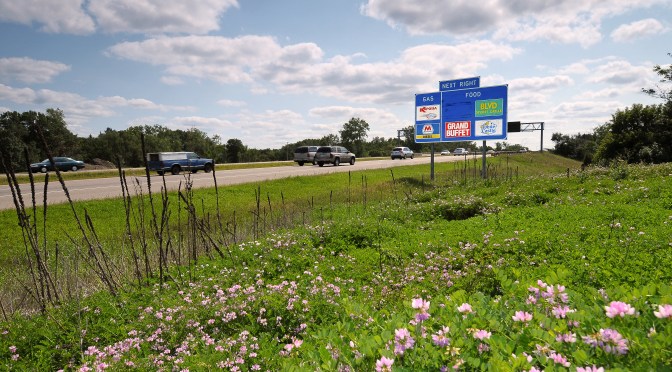
New Project: Comparison of Compost and Proprietary Soil Amendments for Vegetation Establishment
After road construction, the adjacent disturbed soil has a diminished capacity to sustain vegetation, overall soil health is compromised from soil disturbance and there is an increased risk for erosion.
Soil quality in these areas can be replenished by importing topsoil (the preferred choice) or using organic composts. If organic compost is not available, proprietary soil amendments provide a cost-effective alternative. But information regarding the effects, mix ratios and application techniques for these products is limited. Research is needed to better understand optimal organic compost ratios and how to integrate these amendments to improve soil quality.
Continue reading New Project: Comparison of Compost and Proprietary Soil Amendments for Vegetation Establishment Crossroads