

Article reprinted from the Center for Transporation Studies, July 2023
Continue reading Cybersecurity for Automated VehiclesCategory Archives: Automated Vehicle Technology
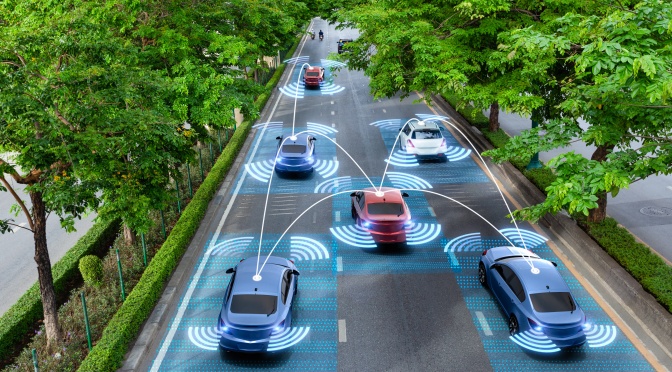
Connecting smart vehicles with traffic signals could reduce fuel use
Originally published in Catalyst, July 18, 2022.
Green means go and yellow means go faster—so goes a wry take on driver behavior at traffic signals. But it’s not just travel time that increases when you brake for a red: Fuel consumption does, too. Could transmitting signal data to connected vehicles (CVs) reduce stop-and-go cycles and fuel use? U of M researchers say yes.
Continue reading Connecting smart vehicles with traffic signals could reduce fuel usePreparing for the Future of CAVs: Cybersecurity, Winter Weather Research
Connected and automated vehicles (CAVs) hold promise for improving transportation operations—but could also provide pathways for “malicious actors” to compromise vehicle security, said Rafael Stern, a U of M assistant professor, in a recent CTS webinar.
Continue reading Preparing for the Future of CAVs: Cybersecurity, Winter Weather Research
Future of Mobility: Urban air mobility
June 26, 2023
What’s next in transportation?
The Future of Mobility series collects the perspectives of top U researchers and other national experts. In 17 articles, the authors scan the horizon and reflect on critical transportation topics. Each article recommends action steps for public officials and policymakers.
CTS is highlighting the articles over the course of the year. This month, we explore two aviation-related articles: Safety and Urban Air Mobility by Demoz Gebre-Egziabher and Advanced Air Mobility by Susan Shaheen and Adam Cohen.

Autonomous aircraft and drones that can move people and goods in new ways are coming to our cities, writes Gebre-Egziabher. Often referred to as urban air mobility (UAM), these new transportation concepts are the flying equivalent of the autonomous car—and they raise just as many important questions about safety, use, and operations. Local communities and agencies are stakeholders that must have a say in safety and provide clear guidance to those developing technologies for UAM, he says.
Shaheen and Cohen write that aviation is undergoing rapid change around the world. A variety of technological advancements and industry investments in electrification, alternative fuels, automation, vertical take-off and landing aircraft, uncrewed aircraft systems, and air traffic management are enabling innovations in aircraft designs, services, and business models. They recommend driving the industry forward with an emphasis on social and environmental benefits, including humanitarian, aeromedical, and emergency response.

Helping automated vehicles ‘see’ through fog and snow
April 18, 2023
While fully automated vehicles (AVs) have not yet reached the roads, the work to get them market-ready is steadily moving forward. One of the essential technologies these vehicles rely on for safety and performance is lidar, which has traditionally experienced a loss of accuracy in bad weather.
Continue reading Helping automated vehicles ‘see’ through fog and snow
Are we ready for CAVs?
Thousand-mile trek collects data on Minnesota’s readiness for automated vehicles
How ready is Minnesota for connected and automated vehicles (CAVs)? Last August, researchers took a four-day, 1,086-mile trip around the state to find out. A newly published report details the team’s findings for transportation professionals and agencies as they consider how to make improvements to our transportation infrastructure for automated vehicles and driving.
Continue reading Are we ready for CAVs?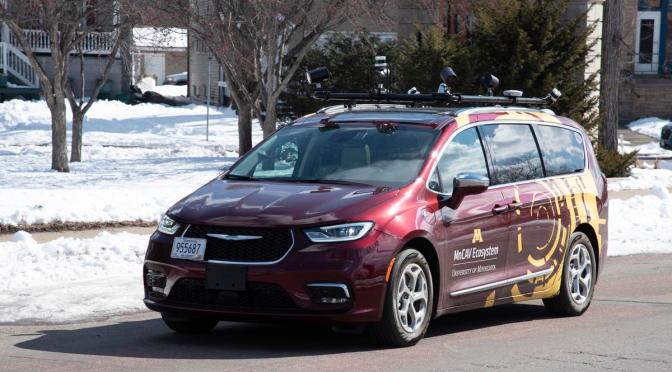
Paving the way for smarter and safer AVs
This article was originally posted on Catalyst, January 2023.
There’s been a lot of progress toward self-driving cars in recent years, but we still have a long way to go before the system runs like a well-oiled machine. Even with all the advances in artificial intelligence and machine learning, automated vehicles (AVs) are still not well-equipped to handle crashes, bad weather, poor visibility, and other unexpected situations on the road.
Continue reading Paving the way for smarter and safer AVs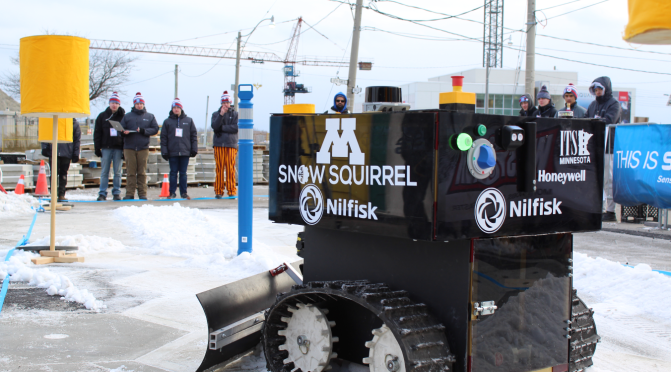
Automated Vehicles Could Increase Accessibility for Twin Cities East Metro
This article was originally published in Catalyst, August 2022.
Connected and automated vehicle (CAV) technology is moving forward, with three pilot shuttle projects on tap in Minnesota this year alone. Rapid developments are leaving little time for planners and policymakers to prepare for the mainstreaming of technology and the evolution of the current transportation system—all while ensuring that transportation equity has a seat in the vehicle.
Continue reading Automated Vehicles Could Increase Accessibility for Twin Cities East Metro
Could remote drivers be the future of ride-hailing?
This article was originally published in Catalyst, August 2022.
A new technology combining nearly autonomous vehicles with remote “tele-operators” has the potential to overcome both the technological and societal hurdles posed by driverless vehicles. Ride-hailing providers will be an important application for remote-driving technology, and U of M researchers found it offers clear advantages for companies and their customers.
Continue reading Could remote drivers be the future of ride-hailing?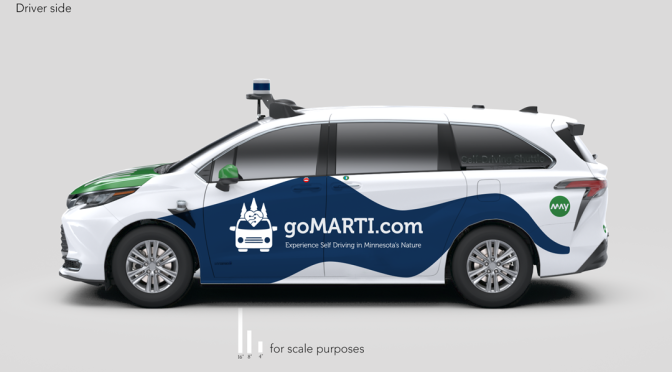
MnDOT CAV Launches Demonstration Projects in White Bear Lake and Grand Rapids
Two exciting new MnDOT CAV projects will be kicking off in the months ahead.
Continue reading MnDOT CAV Launches Demonstration Projects in White Bear Lake and Grand Rapids Crossroads