

Effective stormwater management helps keep roadway contaminants from entering Minnesota’s lakes and streams. Management practices include soil and vegetation in roadside bioretention systems that filter heavy metals and hydrocarbons created by vehicles. Based on other studies, retention and transformation of roadside pollutants should be improved by biochar application to existing or engineered soils. Abundant sources of biomass can be used to produce biochar, a soil amendment with numerous benefits. MnDOT and local agencies identified biochar specifications for effective use in stormwater treatment to support the next phase of testing and development of biochar design guidance.
Continue reading Developing Biochar Specifications for Stormwater Management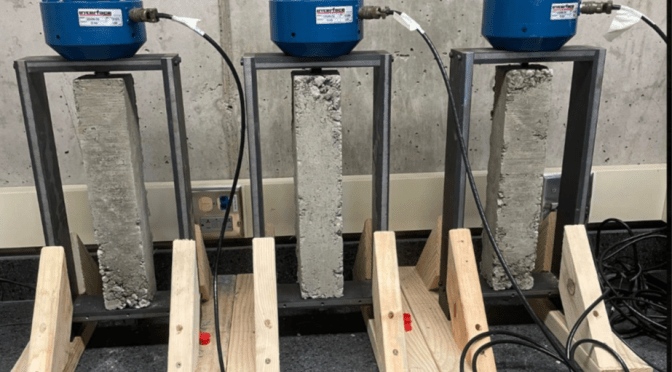
Evaluating Strategies to Prevent Early-Age Bridge Deck Cracking
Premature cracking in reinforced concrete bridge decks is expensive to repair and may lead to rapid bridge deterioration. Despite changes to mix designs, transverse cracking after casting continues to be a problem in Minnesota. This project evaluated alternative concrete mix designs and reinforcement strategies to mitigate early-age bridge deck cracking, reduce maintenance costs and extend bridge deck service lives.
Continue reading Evaluating Strategies to Prevent Early-Age Bridge Deck Cracking
Detecting Endangered Turtles with Environmental DNA
More than 60% of the world’s turtle species are endangered, including Blanding’s and wood turtles, which are native to Minnesota and may be found in the state’s wetlands, ponds, lakes and streams. To protect these vulnerable populations and their habitats, a cost-effective tool developed in this study will efficiently allow for the early detection of these turtles at transportation project sites.
Continue reading Detecting Endangered Turtles with Environmental DNA
Increasing School Bus Stop-Arm Compliance
A significant number of school bus stop-arm violations occur every day throughout the country. In Minnesota, violation and citation data suggests these incidents are grossly underreported and underenforced due to a time-consuming reporting and enforcement process. This project examined current processes and recommended improvements to encourage higher rates of reporting and enforcement.
Continue reading Increasing School Bus Stop-Arm Compliance
Testing Recycled Plastics in Asphalt and Concrete Pavement Mixes
Addressing the increasing need for pavement materials coincides with an increasing supply of plastic waste. Incorporating recycled plastic into aggregate for transportation infrastructure is of growing interest. Testing plastic waste material in both asphalt and concrete pavement mixtures revealed promising results and the need to explore long-term performance and durability.
Continue reading Testing Recycled Plastics in Asphalt and Concrete Pavement Mixes
Evaluating the Friction of Pavement Markings and Colored Pavement
Pavement markings make travel safer for all road users. However, the material used for retroreflectivity can be slicker than the surrounding pavement. To maximize the safety of bicyclists, motorcyclists and pedestrians, MnDOT and local agencies explored the friction values of different marking materials. Project results produced valuable information on relative friction between pavement and marking materials and, importantly, identified effective testing tools to evaluate and compare products.
Continue reading Evaluating the Friction of Pavement Markings and Colored Pavement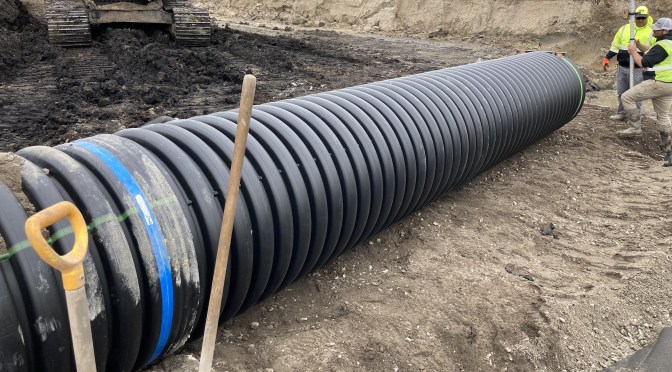
Evaluation of Corrugated Pipes Manufactured with Recycled Materials
MnDOT currently requires corrugated high-density polyethylene (HDPE) pipes to be made with 100% virgin materials. However, recent changes to federal standards allow for the use of corrugated HDPE pipes manufactured with more sustainable postconsumer and postindustrial recycled content. This project examined and compared the performance of both types of corrugated pipes to determine the suitability of using HDPE pipes manufactured with recycled materials in Minnesota.
Continue reading Evaluation of Corrugated Pipes Manufactured with Recycled Materials
Strategies for Addressing Deteriorated Concrete Roads
Treating early deterioration in concrete pavement can extend a road’s service life and defer costly replacement. An assessment of different strategies years later demonstrated that over time, asphalt overlays made the roadways smoother for travelers.
Continue reading Strategies for Addressing Deteriorated Concrete Roads
Impacts of Automated Vehicle Feature Integration
Automated vehicle (AV) features such as adaptive cruise control could significantly increase driver safety and mobility. But in some circumstances, these features can alter vehicle movement and spacing, and interfere with traffic flow. This project analyzed the integration of varying levels of AVs with human-driven vehicles (HVs) and the impact on ramp meter operations to measure the effects and identify potential solutions and modifications.
Continue reading Impacts of Automated Vehicle Feature Integration
Incorporating Sustainability into the Procurement Process
The production and use of construction materials for transportation projects have varying impacts on the environment based on factors such as production process, transportation and material inputs. To mitigate negative outcomes, MnDOT sought to incorporate environmental impacts into the procurement process for concrete mixtures and concrete pavement. This project provided a framework for considering environmental impacts and standardizing a reporting system to encourage the use of low-carbon construction materials in infrastructure projects.
Continue reading Incorporating Sustainability into the Procurement Process Crossroads