
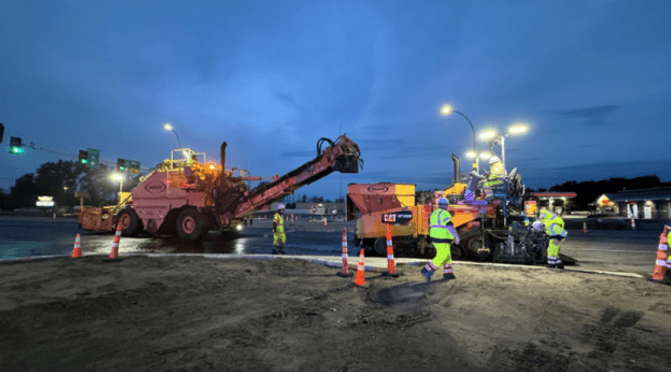
To limit the environmental impacts of transportation projects, agencies need to identify the sources of greenhouse gas emissions throughout a project’s life cycle. By identifying specific sources and activities that generate emissions, the Minnesota Department of Transportation (MnDOT) can take steps to reduce its carbon footprint. This project explored the use of life cycle assessments and Environmental Product Declarations to measure and reduce the emissions associated with MnDOT paving projects, specifically the transportation of asphalt from production plants to job sites and subsequent paving activities.
What Was the Need?
To reduce greenhouse gas emissions associated with the combustion of fossil fuels, agencies can utilize life cycle assessments (LCAs) and Environmental Product Declarations (EPDs) to inform project planning and construction activities. Because these tools can effectively estimate carbon emissions, integrating them into MnDOT planning and management practices is important for reducing the environmental impacts of transportation infrastructure projects.
This project investigated the use of LCAs and EPDs to measure and document emissions associated with transporting asphalt pavement to job sites and conducting paving operations. The results provide MnDOT with tools and guidance for incorporating LCAs and EPDs into its procurement processes and specifications to better measure and reduce greenhouse gas emissions.
What Did We Do?
To better understand the environmental impacts of asphalt paving projects, investigators moved beyond analyzing the production of construction materials and examined construction-phase activities. Specifically, the project focused on transporting paving materials to construction sites and paving operations at the site. To identify emission sources and activities, field data was collected from a variety of paving projects using different asphalt mixtures, including Superpave 5, conventional Superpave and specialty mixes such as ultra-thin bonded wearing course.
The project analyzed data from 10 projects using pay-item information and referenced units such as lane-miles, square yards and tons for comparison. Investigators conducted an LCA using global warming potential (GWP) as the primary indicator of environmental impact.
What Did We Learn?
Results showed that construction activities can be a significant contributor to GWP, particularly when asphalt must be hauled long distances. Applying thicker pavement layers that require multiple equipment passes also increased emissions. In contrast, projects with faster paving speeds, higher production targets or portable production equipment located near project sites generally produced lower GWP impacts.
However, while portable asphalt production plants can reduce hauling-related emissions, relocating and operating those plants also generates emissions that may partially offset GWP gains from the shorter hauling distances. Additionally, efforts to reduce GWP should not compromise construction quality, as lower-quality construction can lead to increased maintenance needs and earlier replacement, resulting in additional emissions over the pavement’s life cycle.
Investigators also developed a user-friendly tool to estimate the GWP associated with transporting materials. This tool generates GWP estimates based on key project inputs, including lift thickness and the one-way hauling distance between the asphalt plant and job site.
To support the use of EPD data in procurement processes, the project developed a web-based system that streamlines the submission, storage and accessibility of EPDs from vendors to agency personnel. The system minimizes manual data entry, maintains a clear chain of custody for data and improves EPD management and review, enabling more efficient integration of EPD information into procurement activities.
“The results of this work provide valuable environmental impact information and include a web-based tool to better manage and use this information to reduce carbon levels,” said Curt Turgeon, Director of MnDOT’s Office of Materials and Road Research.
Finally, training sessions were developed and delivered on LCAs, EPDs and carbon accounting. Topics included EPD development, cradle-to-gate and gate-to-construction LCA stages, data-entry procedures and interpretation of EPD results.
What’s Next?
This project sought to advance the use of EPDs and LCAs as standard practices in the procurement and management of transportation infrastructure projects in Minnesota. The results provide MnDOT with tools and datasets to consistently measure greenhouse gas emissions across pavement life cycle stages, compare alternatives, identify high-performing projects and practices and integrate sustainability considerations into procurement, specifications and project planning.
The project also developed a web-based system that allows construction material producers to securely share their EPD data with MnDOT and supports analyses that enhance the use of EPD information. Future research could focus on developing an internal EPD database and management system with advanced analytical capabilities.

