
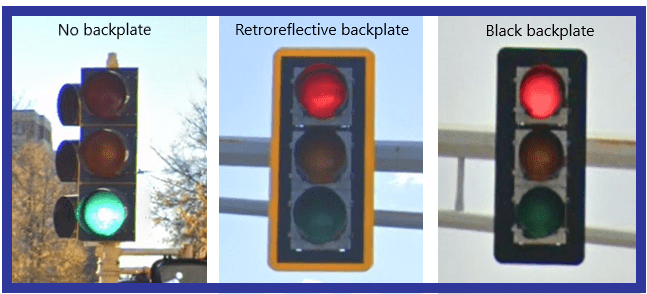
Inconspicuous traffic signals are often cited as contributing to collisions at intersections. If that is true, making traffic signals more conspicuous should lead to fewer crashes. A study published at the TRB conference in 2005 suggested that yellow retroreflective backplates were most effective, reducing accidents by 15% at intersections, and the FHWA later adopted this as a Proven Safety Countermeasure.
MnDOT followed this recommendation and installed yellow retroreflective signal backplates at 116 intersections in Minnesota between 2016 and 2021. This study examined the instance of collisions before and after the installation of these backplates, and also compared the number of collisions at these intersections with those at comparable intersections that had not been retrofitted with retroreflective backplates.
Researchers found no statistical reduction in overall crashes after the backplates were installed. They also found no significant difference when comparing the yellow backplates to similar locations that did not have retroreflective signal backplates.
Researchers theorized that MnDOT signals were already designed to be highly visible, so perhaps the addition of the yellow retroreflective backplate made little difference.
 Crossroads