
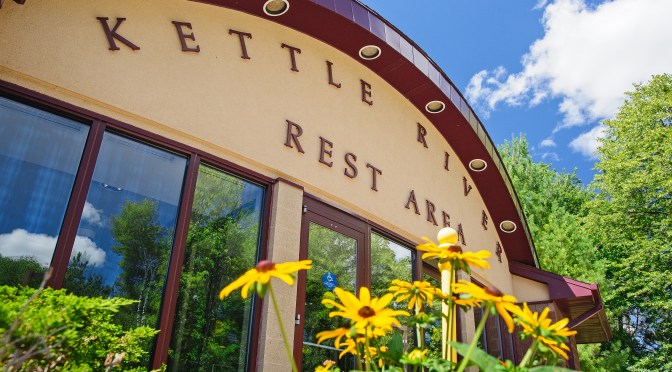
MnDOT manages over 50 large safety rest areas (SRAs) with several amenities and travel information centers (TICs) with expanded customer service. Many of the SRA and TIC buildings were built before the significant advancements in energy efficiency and building technology made in the past few decades.
Energy-efficiency upgrades of SRAs and TICs would ensure visitor comfort, result in long-term energy and operational savings, and minimize greenhouse gas emissions. Potential improvements could range from adding solar panels or heat pumps to making more building renovations.
A comprehensive, data-driven tool to compare the benefits of potential building upgrades against the costs will support MnDOT in prioritizing the level of investment in these facilities, which are relied on by the traveling public.
“The research will support MnDOT in prioritizing energy-efficient modifications and upgrades to our rest areas and travel information centers,” said Anthony Chevalier, senior landscape architect, MnDOT Site Development Unit. “Numerous benefits from these improvements include energy savings, greenhouse gas reductions, and operation and maintenance savings, which lead to reductions in life cycle costs.”
Objectives
In a new project, researchers will develop a method to allow MnDOT to comprehensively analyze and prioritize energy-efficient building upgrades for nearly all of the state’s SRAs and TICs.
The objectives are:
- Collect building and energy data on each facility from utility bills, building specifications and surveys of staff and visitors
- Develop calibrated energy simulation models for all facilities
- Create a database of a range of energy savings measures and upgrades for each building, including expected energy consumption and environmental benefits and associated costs
- Produce a decision support tool for decision-makers to evaluate costs and benefits of potential energy and building improvements for all SRAs and TICs
Project Details
- Estimated Start Date: 07/01/2024
- Estimated Completion Date: 08/31/2026
- Funding: MnDOT
- Principal Investigator: Yao Yu
- Co-Principal Investigators: Chau Le, Mijia Yang
- Technical Liaison: Anthony Chevalier
Details of the research study work plan and timeline are subject to change.
To receive email updates about this project, visit MnDOT’s Office of Research & Innovation to subscribe.
 Crossroads