
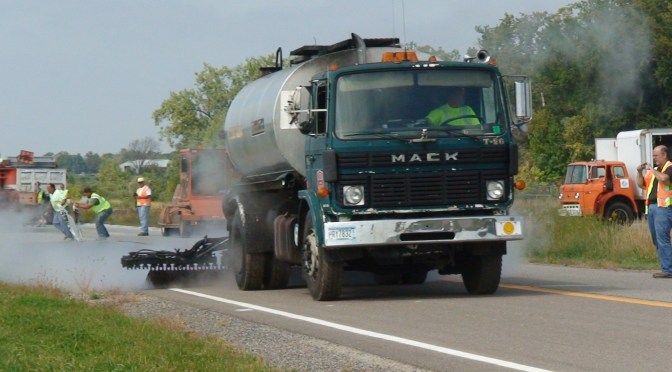
Aging pavement infrastructure and the deterioration of pavement surfaces over time remain an ongoing challenge in meeting roadway user expectations. Preventive pavement preservation treatments that are applied on sound, structured-condition pavements can extend the pavements’ functional service life and reduce future maintenance costs. Fog seals are one of these treatments. Fog seals are applied by spraying a thin layer of emulsion onto the pavement to slow or in some cases reverse the damage caused by oxidative aging. Asphalt emulsions are the most common material used in fog seals. Rejuvenators are usually added to the formulation to lower its viscosity and possibly even rejuvenate the surface of the existing aged pavement.
A variety of bio-sealant products are available on the market and can be used to seal, and in some cases rejuvenate the in-place asphalt. Soybean derived additives have been found to be effective rejuvenators, reducing the stiffness of aged and brittle asphalt binders. Two soy-derived surface treatments, epoxidized soybean oil (SESO), and BioMAG, which contains SESO and polyacrylated epoxidized high oleic soybean oil (PAEHOSO), were formulated into bio-fog seals and applied on 3 pavement sections.
In a collaborative study between MnDOT, the National Road Research Alliance, and Iowa State University, the performance of these water-based emulsions was evaluated, regarding their dry time, pavement skid resistance, permeability, stiffness, and pavement marking reflectivity.
Findings
Investigators concluded that the use of bio fog seals as a maintenance treatment generally helped to postpone the need for resurfacing or applying a new overlay. The treatment improved the skid resistance of the pavements, didn’t affect the reflectivity of the pavement markings, and restored the stiffness of the asphalt mixture. Additionally, it set fast, opening the road to traffic within 30 minutes of the fog seal application.
Potential Benefits
Potential benefits of this research are improved flexibility, sealing, and preservation of roadways while developing new domestic markets for soybean products. Increased longevity of the roadway delays major rehabilitation and provides improved pavement condition in the interim. Preservation of pavements helps keep roads in better condition longer, which leads to reduced pavement life-cycle cost.
 Crossroads