

Pavement markings make travel safer for all road users. However, the material used for retroreflectivity can be slicker than the surrounding pavement. To maximize the safety of bicyclists, motorcyclists and pedestrians, MnDOT and local agencies explored the friction values of different marking materials. Project results produced valuable information on relative friction between pavement and marking materials and, importantly, identified effective testing tools to evaluate and compare products.
Continue reading Evaluating the Friction of Pavement Markings and Colored PavementTag Archives: featured
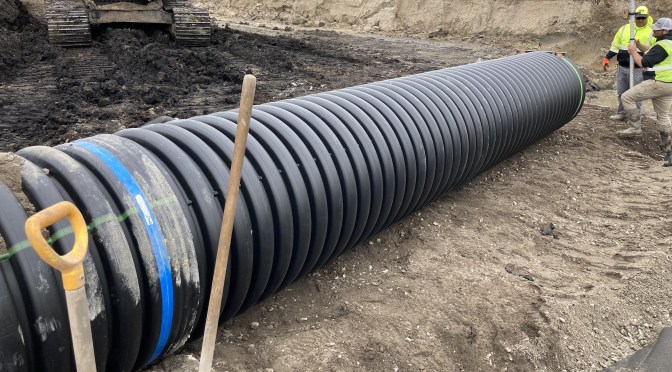
Evaluation of Corrugated Pipes Manufactured with Recycled Materials
MnDOT currently requires corrugated high-density polyethylene (HDPE) pipes to be made with 100% virgin materials. However, recent changes to federal standards allow for the use of corrugated HDPE pipes manufactured with more sustainable postconsumer and postindustrial recycled content. This project examined and compared the performance of both types of corrugated pipes to determine the suitability of using HDPE pipes manufactured with recycled materials in Minnesota.
Continue reading Evaluation of Corrugated Pipes Manufactured with Recycled Materials
Strategies for Addressing Deteriorated Concrete Roads
Treating early deterioration in concrete pavement can extend a road’s service life and defer costly replacement. An assessment of different strategies years later demonstrated that over time, asphalt overlays made the roadways smoother for travelers.
Continue reading Strategies for Addressing Deteriorated Concrete Roads
Impacts of Automated Vehicle Feature Integration
Automated vehicle (AV) features such as adaptive cruise control could significantly increase driver safety and mobility. But in some circumstances, these features can alter vehicle movement and spacing, and interfere with traffic flow. This project analyzed the integration of varying levels of AVs with human-driven vehicles (HVs) and the impact on ramp meter operations to measure the effects and identify potential solutions and modifications.
Continue reading Impacts of Automated Vehicle Feature Integration
Incorporating Sustainability into the Procurement Process
The production and use of construction materials for transportation projects have varying impacts on the environment based on factors such as production process, transportation and material inputs. To mitigate negative outcomes, MnDOT sought to incorporate environmental impacts into the procurement process for concrete mixtures and concrete pavement. This project provided a framework for considering environmental impacts and standardizing a reporting system to encourage the use of low-carbon construction materials in infrastructure projects.
Continue reading Incorporating Sustainability into the Procurement Process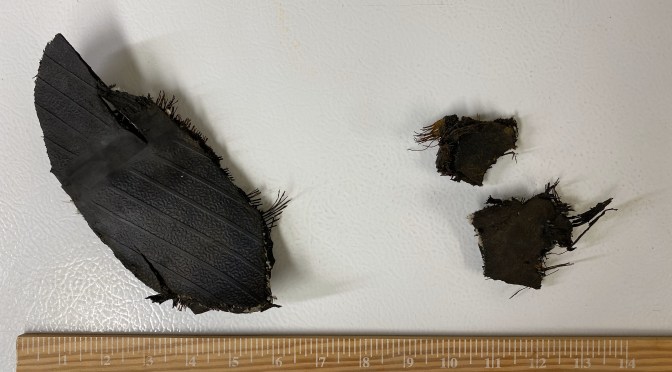
Utilizing Recycled Tires to Treat Stormwater
Repurposing old tires as tire-derived aggregate (TDA) is a stormwater management practice that could retain phosphate in underground treatment systems and prevent it from reaching the soil, surface waters and groundwater. However, chemicals from the TDA may leach into the soil and water sources. This project identifies the environmental impacts and cost-effectiveness of deploying TDA to manage stormwater in Minnesota cities and counties.
Continue reading Utilizing Recycled Tires to Treat Stormwater
Enhancing Safety for Pedestrians and Bicyclists at Roundabouts
Compared to traditional intersections, roundabouts have been proven to decrease serious crashes. However, because drivers yield rather than stop upon entering roundabouts and at crosswalks, public concerns about pedestrian and bicyclist safety remain. Research and field evaluations into driver yielding and speed behaviors generated insights to guide local transportation agencies and MnDOT to further enhance pedestrian safety at roundabouts.
Continue reading Enhancing Safety for Pedestrians and Bicyclists at Roundabouts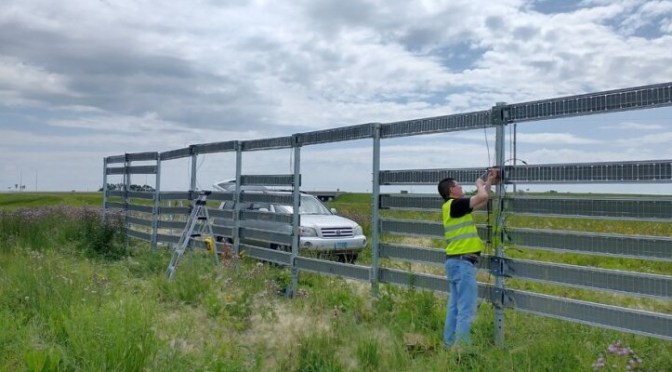
Solar Snow Fence Controls Drifting Snow While Generating Power
Solar snow fences not only retain the benefits of a traditional snow fence by controlling blowing and drifting snow in winter, they create green energy throughout the year. However, to be effective, the fence must withstand harsh weather elements and produce enough energy to justify the use and cost of solar panels. This project evaluated the installation and performance of a 100-foot solar snow fence for 18 months to determine its functionality and economic feasibility.
Continue reading Solar Snow Fence Controls Drifting Snow While Generating Power
Establishing Post-Construction Roadside Vegetation Growth
Roadside vegetation is essential for managing stormwater and mitigating soil erosion. Using organic and proprietary amendments to improve the topsoil after road construction projects are completed may help reestablish vegetation more quickly and provide better outcomes.
Continue reading Establishing Post-Construction Roadside Vegetation Growth
Impact of Start Time on Students Walking and Biking to School
To increase the number of students who walk or bike to school, policymakers first need to understand the primary factors that prevent students, parents and caregivers from choosing these travel modes. A look at the factors that influence this decision provided information to address barriers to walking and biking for children and families in Minnesota communities.
Continue reading Impact of Start Time on Students Walking and Biking to School Crossroads