All posts by Christine Anderson

Congestion-reduction measures on I-35W: How well do they work?

In an effort to combat congestion in our country’s urban areas, the United States Department of Transportation launched the Urban Partnership Agreement (UPA) program in 2007. The program infused nearly $900 million into transportation-related projects in four cities nationwide, including the Twin Cities metropolitan area. Minnesota’s projects—which include the installation of MnPASS dynamic toll lanes and variable message signs—focused on improving traffic flow in the I-35W corridor between Minneapolis and the city’s southern suburbs.

To understand the effectiveness of measures implemented under the UPA program, a team of University of Minnesota researchers examined three separate but related areas: the effects of a new variable speed limit (VSL) system, the impact of severe weather conditions on road safety, and the behavior and traffic impacts of bus rapid transit operations. Their work was funded by the Intelligent Transportation Systems Institute, a part of CTS.

Key findings included:

  • Drivers don’t typically comply with advisory speed limits posted on VSL signs along the I-35W corridor during congested conditions, but they may use them to help gauge and prepare for downstream congestion—resulting in a smoother and possibly safer traffic flow
  • Some parts of the corridor’s shoulder lanes—which are opened to traffic during specific times of the day as part of the UPA program—contain low areas that can flood during heavy rains
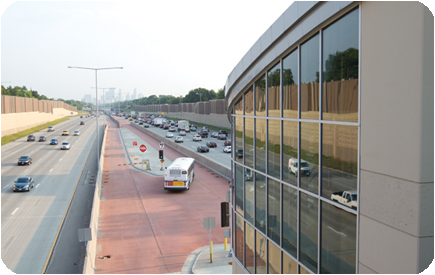
  • Buses traveling on the corridor underuse the MnPASS lane. In addition, bus lane changes (from stations located in the median to those located on the right side of the highway) can generate visible disturbances during moderate and heavy congestion, but they don’t seem to contribute to the breakdown of traffic flow

For more information, read the full article in the September issue of Catalyst.

New Complete Streets materials highlight best practices

Complete Streets scene
Photo courtesy Carissa Schively Slotterback

A new study from researchers at the U of M’s Humphrey School of Public Affairs aims to help Minnesota practitioners get Complete Streets projects on the ground.

“The goal was to look at what it takes to move a community from Complete Streets concept to Complete Streets project,” says Carissa Schively Slotterback, one of the project’s lead investigators.

As part of the study, Slotterback teamed with her Humphrey School colleague Cindy Zerger to investigate what’s working well in a variety of Complete Streets implementation efforts across the country. The study was sponsored by MnDOT and the Minnesota Local Road Research Board.

Slotterback and Zerger investigated six best practices areas related to Complete Streets: framing and positioning, institutionalizing, analysis and evaluation, project delivery and construction, promotion and education, and funding. Project findings stressed the importance of project context, the need for institutional and cultural changes, and the benefits of engaging advocates and project champions.

Based on the findings, Slotterback and Zerger are creating 11 case studies and a guidebook to help practitioners apply best practices and lessons learned from other communities to their own projects. The materials are set for completion this fall.

To learn more, read an article about the project in the August issue of CTS Catalyst.

New fuel cell prototype could power rural ITS applications

Intelligent transportation systems (ITS) technologies can be used to enhance transportation safety and mobility, but the sensors and communications equipment needed for ITS applications typically require access to electricity. In rural areas, limited access to the power grid can make it challenging to implement ITS devices.

Rural intersection roadway lighting
In addition to powering ITS devices, the fuel cells could provide power for rural
intersection roadway lighting. Photo source: http://www.flickr.com/photos/36521983488@N01/175482261/

Current solutions for providing power to off-grid locations include battery packs or diesel generators, both of which require constant maintenance to recharge, refuel, or replace. Other alternatives include solar panels and wind turbines, but cost and performance concerns have limited their use.

“One of the issues with these green power alternatives, such as solar panels, is dependability… especially in the long, cold, and dark Minnesota winters,” says Victor Lund, a traffic engineer with St. Louis County Public Works. Until this technology matures, there is a need for other options that can provide confidence in generating power, Lund says.

To provide a more effective and dependable power alternative, researchers from the University of Minnesota Duluth (UMD) have developed a portable prototype system that uses hydrogen-based fuel cells to generate electricity. The UMD research team was led by chemical engineering associate professor Steven Sternberg, and the project was sponsored by the ITS Institute at the University of Minnesota.

The hydrogen-based fuel cell provides a clean, compact, high-efficiency energy source for an accompanying battery pack, which could be used to operate various ITS devices. The prototype is completely independent of the power grid, works well in cold weather, and requires maintenance only once each week for recharging. The cost of the system is about $7,500, with an additional operating cost of $2,000 per year for fuel materials.

Potential applications include powering variable message signs, dedicated short-range communication technologies, and warning blinkers on traffic signs. According to Lund, the system’s applications extend beyond powering ITS devices. For instance, the fuel cells could be used for rural intersection roadway lighting or as a back-up source for traffic signals in case of a power outage.

Reprinted from CTS Catalyst, June 2013.

Quality-of-life study helps MnDOT evaluate performance measures

As part of a study on transportation and quality of life, MnDOT has partnered with researchers from the University of Minnesota’s Tourism Center to compare current MnDOT performance measures with quality-of-life factors that matter most to Minnesotans.

driver

The evaluation was designed to help MnDOT ensure alignment between the factors that best predict transportation satisfaction among Minnesota citizens and the indicators MnDOT uses to track and measure its performance. The study team was led by Ingrid Schneider, Tourism Center director, and Karla Rains, director of customer relations at MnDOT.

To conduct the evaluation, the research team first analyzed data collected using surveys and focus groups in a previous phase of the quality-of-life study. The data included information on the categories that contribute to quality of life in Minnesota, the role of transportation, and the specific factors or services within transportation that affect citizens’ quality of life.

From these data, the team identified a list of key transportation elements that drive customer satisfaction. Results indicate that the most significant predictors can be grouped into three categories: maintenance/safety, mobility, and transparency. Within those categories, 11 specific items—such as snow and ice removal, road smoothness, commute time, and satisfaction with long-term planning—account for 56 percent of the differences in citizens’ transportation satisfaction.

The team then compared the factors most important to Minnesota citizens with MnDOT’s current performance measures. Overall findings indicate that these existing measures, which track performance in nine major areas, broadly capture much of what is important for Minnesotans’ transportation-related quality of life.

“This was an important key finding for us—we’re already measuring and reporting on many of the things that matter most to our customers,” Rains says. “It was encouraging and comforting to see that.”

In addition to affirming MnDOT’s existing measures, the evaluation identified a few gaps, specifically in the areas of safety, the environment, and transparency.quality

For example, MnDOT typically reports transportation safety in terms of total traffic fatalities and serious injuries from vehicle crashes. However, the quality-of-life study revealed citizen interest in a broader view of traveler safety. As a result, MnDOT plans to include bicycle, pedestrian, and railroad-grade crossing fatality data in future performance measures. “This is already data that we track, but now we plan to add more reporting of fatalities by mode than we have included before,” Rains says.

Based on other study-identified topics of importance, MnDOT plans to add new performance measures focused on air pollution and conduct more reporting of information related to public trust.

“We continue to use this data as guidance in our planning, and it continues to be useful,” Rains says. “We want to make sure we’re listening and measuring ourselves against the things that are most important to our customers.”

Reprinted from CTS Catalyst, June 2013.