

Ineffective drainage can lead to expensive roadway damage and decrease a pavement’s service life. New guidance will help local agencies understand drainage issues unique to their areas and provide design considerations to mitigate pavement damage resulting from moisture.
Poor subsurface drainage can significantly reduce the life of a roadway. In a study conducted by the National Cooperative Highway Research Program, researchers found that excess water reduces the life expectancy of pavement systems by more than half. This finding supported earlier research, which estimated that pavement service life may be reduced by more than 50% if the pavement base is saturated as little as 10% of the time.
Three primary factors contribute to an effective subsurface drainage system:
- Soil type.
- Source of the water impacting the roadway.
- Freeze-thaw cycles.
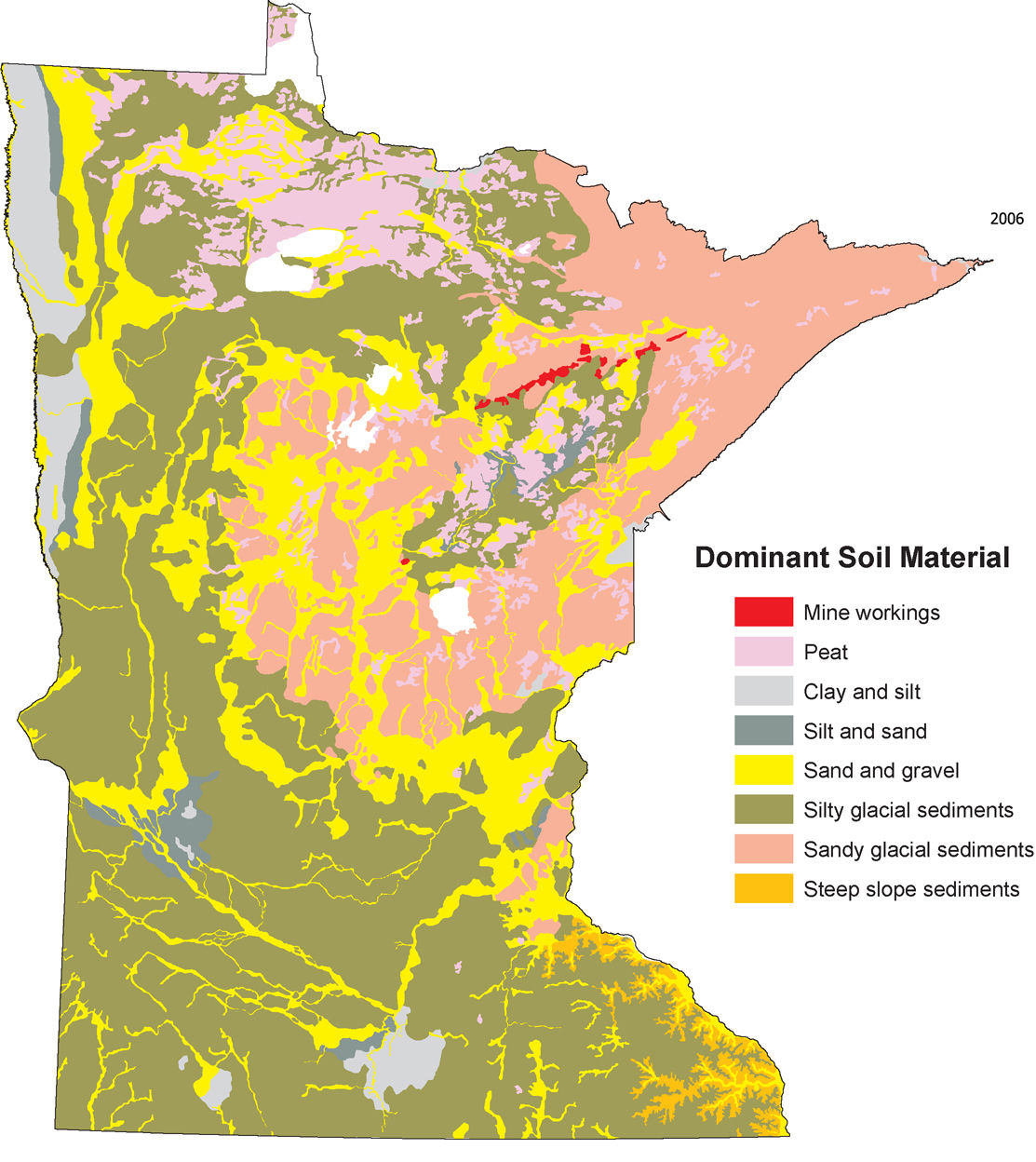
Soil types vary considerably in Minnesota, ranging from sand or gravel to clay and silt. Snow melt or rain is the most common water source, but groundwater can also saturate soil and weaken pavement structures. Freeze-thaw cycles increase the impact of moisture contained within a pavement structure. Designers need to understand both soil type and water source to select the best design approach to mitigating freeze-thaw damage.
“Understanding drainage is so important for the life of roads, and proper drainage varies so much within this state due to the soils. County and city engineers needed information to understand why some approaches worked well in some counties, but not in others,” said Susan Miller, principal, SRF Consulting Group, Inc.
Determining which design choice will most cost-effectively result in a well-drained road can be challenging for local agencies. Previous research has refined best practices in subsurface drainage, but it had not been synthesized with recent local experience. In addition, most of the previous guidance was focused on new construction and did not address remediation of existing roads.
In the fall, winter and spring of 2018-2019, many Minnesota counties experienced damage from inadequately drained subsoils. Local agencies needed guidance about cost-effective practices to rehabilitate their roadways, especially gravel roads.
What Was Our Goal?
The Local Road Research Board sought to compile best practices for designing and installing subsurface drainage suitable for Minnesota conditions that consider the variables that impact their specific roadways.
What Did We Do?
This project began with a review of key research studies performed in Minnesota and other states with geographic or climatic conditions similar to Minnesota’s to examine the causes of ineffective subsurface drainage and poor pavement performance. Successful practices and designs were summarized from these resources, which included a guide to the MnDrain tool that is used in edge drain design.
After compiling this information, investigators surveyed county agencies and identified those that successfully employ drain tile in drainage designs. Using the results from the survey and input from the Technical Advisory Panel (TAP), investigators then conducted focus groups with selected experts from around the state who had expansive knowledge and experience in pavement drainage systems. These representatives shared the specifications and guidance that they have used in implementing drainage projects, as well as best practices and lessons learned for new construction projects and upgrades. The information gathered during the focus groups was incorporated into the findings from the review of the literature to develop the guidance for local agencies.
What Was the Result?
This project produced a user-friendly guide to aid local agencies in choosing cost-effective design solutions for proper subsurface drainage in Minnesota counties. The guide explains how to better understand subsurface drainage based on specific variables in Minnesota counties, provides design options to improve drainage and highlights steps to address drainage in new construction and existing pavements. Alternatives for improving drainage without installing drain tile are also given.
“This project is not just focused on new pavement or updating older gravel roads. Proper drainage can have a beneficial impact on every type of roadway in any environment,” said Joe Wilson, county engineer, Lincoln County.
The guide emphasizes the financial and operational benefits of drainage. Roads with good drainage systems recover faster when experiencing spring freeze-thaw conditions, which are common throughout the state. Faster recovery times make the pavements less vulnerable to problems resulting from heavy vehicle loads.
Proper maintenance is also underscored to ensure the service life of a pavement system. The guide includes best practices to perform during and after construction, and recommends inspecting the system annually for blockages from erosion or vegetation, and other damage.
An FAQ section for engineers addresses design, materials, maintenance and cost estimates. Typical specifications and additional reference materials are also included in the guide.
What’s Next?
Initial feedback from drainage engineers about the new guide has been positive. However, practitioners recognize the impact that climate change has on the seasonality of winter and the frequency of freeze-thaw cycles. Because of these conditions, the guide will need to be updated every five to 10 years to ensure that practices remain relevant.
 Crossroads