

As climate conditions change and seed development processes advance, some grass varieties may perform better than others. New research will allow MnDOT to update its approved turfgrass list and ensure it remains up to date with the most effective varieties.
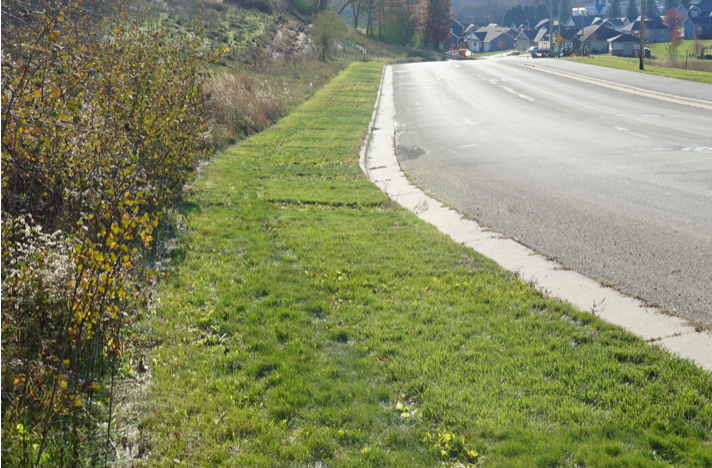
In addition to making roadsides visually appealing, turfgrass serves other important purposes such as controlling erosion, providing stability for the road base, preventing stormwater runoff and improving water quality. Grass varieties that establish and perform well have a longer life span and prevent the need for frequent reseeding and other maintenance. In Minnesota, turfgrass needs to be drought tolerant and withstand harsh winter conditions and deicing salts.
MnDOT’s list of approved seed varieties changes occasionally when seed vendors provide justification for adding a new variety. Because climatic conditions change and field research may show some varieties don’t perform well, however, the current list could be reevaluated. Additionally, increasing innovation in turfgrass seed development may offer new varieties to add to the list but seed vendors lack clarity on the data requirements and decision-making process MnDOT uses to amend the list.
“As a result of this research, we will have healthier, better-performing turfgrass along our roads that will withstand our harsh conditions and require less maintenance,” said Warren Tuel, erosion control specialist, MnDOT Office of Environmental Stewardship.
MnDOT wanted to update the approved turfgrass variety list and create a data-driven, transparent process vendors can participate in to remove or add turfgrass varieties in the future.
What Was Our Goal?
The goal of this project was to update the MnDOT-approved turfgrass list, remove underperforming varieties, add varieties with proven performance and develop a process to approve turfgrass varieties for inclusion on the list.
What Did We Do?
In addition to field studies and research, several other premier sources for turfgrass information provided a basis for a comprehensive evaluation of the turfgrass varieties on MnDOT’s current approved list:
- The National Turfgrass Evaluation Program is an established turfgrass research program evaluating species across North America.
- The Cooperative Turfgrass Breeders Test facilitates data sharing among breeders to understand how various cultivars are performing across the country.
- Rutgers University Center for Turfgrass Science publishes an annual research report on the performance of various turfgrass cultivars.
Primary data guiding whether to add or remove any varieties from the list included turfgrass quality in trials with low water, fertilizer and pesticide use; performance of varieties during prolonged periods of drought; and turfgrass reaction to salt stress from winter deicing operations. Other considerations included how well seeds establish and how well they tolerate shade, heat and foot traffic.
Lastly, a survey of seed distributors, seed companies and turfgrass breeders informed researchers in developing a new seed variety approval process. The survey included questions about the existing approval process and the allowed frequency of proposing new turfgrass varieties, the required sources and types of data, and the transparency of data provided by other vendors.
What Did We Learn?
Because the turfgrass varieties on MnDOT’s existing list have undergone few roadside evaluation trials, researchers took a conservative approach in identifying varieties that could be removed from the list. Turfgrass varieties consistently performing in the bottom 25% of trials that the agency can consider removing included five Kentucky bluegrasses, two creeping red fescues and one sheep fescue.
Varieties that performed well in trials, particularly if they were the subject of other research showing tolerance to typical stresses, included 41 Kentucky bluegrasses, eight hard fescues, seven Chewings fescues, six strong creeping red fescues, five slender creeping red fescues and two sheep fescues. Because there are many varieties that have not been included in trials, researchers noted that stakeholders will likely propose good candidate turfgrass options in the future.
“In addition to updating MnDOT’s turfgrass list to reflect current conditions and accommodate innovation in new turfgrass variety development, the agency can tweak its approval process to be more transparent, allow ample options and keep the list up to date into the future,” said Eric Watkins, professor, University of Minnesota Department of Horticultural Science.
Through the survey, seed vendors indicated an interest in MnDOT accepting both public and private data in proposals and requested a transparent decision-making process. Based on considerations provided by the survey respondents and the project’s Technical Advisory Panel (TAP), investigators proposed a new process to update seed lists. The process would use an online form that asks seed vendors to provide specified contents and preferred data. Requests would be accepted on a rolling basis and during a specific approval window in late fall so vendors can plan for the following season. A review committee, including MnDOT staff, turfgrass researchers, seeding contractors and other knowledgeable turfgrass industry representatives, would then recommend varieties to MnDOT.
Additional recommendations included annually ensuring approved seeds remain available, periodically reviewing approved seed performance and adopting a more flexible, non-static seed list that is separate from the MnDOT Seeding Manual.
What’s Next?
MnDOT’s TAP will review and make appropriate deletions and additions to the approved turfgrass variety list and consider changes to the approval process. The agency will decide how to inform stakeholders of the changes, likely through postings on the MnDOT website, presentations at seed vendor conferences and outreach to trade organizations such as the Minnesota Seeding Contractors Association.
 Crossroads