
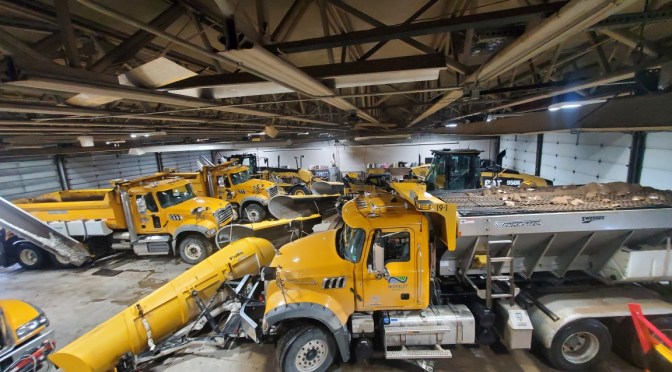
Fleet management helps agencies maximize operations, productivity and safety while limiting costs and protecting vehicles and equipment. Given the many factors involved in managing fleets, determining the best time to replace fleet vehicles and heavy equipment is an ongoing challenge. This project explored current fleet management practices across Minnesota and developed a spreadsheet tool to help agencies identify the most cost-effective age for replacing vehicles and equipment.
What Was the Need?
Public agencies in Minnesota manage approximately 7,500 fleet vehicles. Effective fleet management requires agencies to balance operations, safety, productivity, costs and asset preservation. As government regulations change, public expectations evolve and new technologies such as electric vehicles become available, fleet management decisions are becoming increasingly complex.
This project investigated current fleet management practices and developed a decision-support tool to help local agencies evaluate replacement strategies. Tool results provide transparent, quantifiable and defensible evidence to support fleet management decisions. They can also help agencies assess whether to lease or purchase equipment and identify the best time to retire assets based on current conditions.
What Did We Do?
Investigators conducted a literature review, surveyed Minnesota Local Road Research Board members and completed follow-up interviews with six counties to better understand current fleet management practices. This work included identifying existing models and methods, data needs and the challenges agencies encounter when developing equipment replacement schedules.
Next, investigators developed and validated a spreadsheet tool to provide local agencies with transparent, data-driven calculations for evaluating vehicles and heavy equipment. Survey responses helped define user capabilities, the literature review established theoretical bounds and interviews provided ground truth data. Investigators then developed an outline defining fundamental models, relationships, data items and features. A beta version of the tool was provided to the Technical Advisory Panel (TAP) for review, and TAP feedback was used to refine the tool.
The tool analyzes six types of vehicles and equipment: pickup trucks, motor graders, tractor roadside mowers, loaders, excavators and snowplows.
What Did We Learn?
Survey results indicated that most agencies track and store fleet information using software and/or spreadsheets. Most also have a specific annual equipment replacement budget and are allowed to lease equipment. The top factors used to justify vehicle replacement were equipment requiring more repairs than budgeted, vehicle reliability and vehicle age. The top reasons agencies replace vehicles and heavy equipment were that the asset had reached its expected lifespan, reached expected hours or miles, or was no longer functioning. A large majority of respondents reported keeping equipment longer than originally planned.
The tool performs a life cycle cost analysis using information entered by each agency for each vehicle or equipment type. These inputs include:
- Agency information: county, road mileage maintained, total fleet size, county population and annual maintenance and replacement budgets.
- Operations variables: vehicle or equipment type, maintenance level, tire repair frequency, fuel type, fuel price, estimated mileage, fuel consumption and insurance costs.
- Purchase information: purchase or lease, acquisition year, list price, down payment, monthly lease payment, lease term and buyout price.
The results provide guidance, documentation and quantifiable support for fleet management decisions. Specifically, the tool identifies a primary replacement year, when the total cost of owning and operating the vehicle or equipment is at its lowest. It may also identify a secondary replacement year, when operating costs begin to exceed ownership costs. The tool also provides supporting evidence for purchasing or leasing decisions.
“This easy-to-use tool offers valuable guidance and transparent output that provides evidence to support fleet management decision-making, including purchasing and leasing decisions,” said Mike Suska, Assistant Public Works Director in Nicollet County.
What’s Next?
This tool will likely offer the most value to smaller agencies with limited fleets and no staff devoted to fleet management and operations. It can also support a more consistent management framework across decentralized fleet operations.
To maximize the tool’s usefulness, investigators recommended that agencies establish consistent procedures for collecting and maintaining fleet data, such as purchase price, maintenance costs and utilization rates. Reliable input data will help ensure accurate tool calculations. Training for the tool is available online.

