
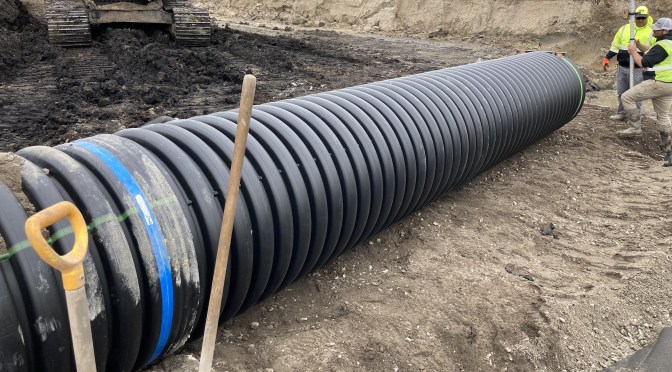
MnDOT currently requires corrugated high-density polyethylene (HDPE) pipes to be made with 100% virgin materials. However, recent changes to federal standards allow for the use of corrugated HDPE pipes manufactured with more sustainable postconsumer and postindustrial recycled content. This project examined and compared the performance of both types of corrugated pipes to determine the suitability of using HDPE pipes manufactured with recycled materials in Minnesota.
Although MnDOT does not currently allow the use of corrugated HDPE pipes manufactured with recycled materials, recent research has found that these pipes can be effective for highway and railroad drainage applications. Using recycled materials in place of virgin materials has environmental benefits, diverting materials from landfills and reducing the carbon footprint associated with using raw materials. Further, the federal standards include requirements to ensure the pipes manufactured with recycled content have a service life of at least 100 years, which exceeds MnDOT’s current service life requirements.
To better inform policy decisions regarding the future use of recycled materials in HDPE pipes and to determine the suitability of these pipes in culvert and storm sewer use, researchers compared their performance to pipes manufactured with only virgin materials.
What Did We Do?
Investigators compared and evaluated corrugated HDPE pipes manufactured with a blend of approximately 40% virgin and 60% recycled materials to pipes manufactured with only virgin materials. Both types of pipes were installed under a state highway near Fosston, Minnesota, as a culvert replacement. The 3-foot-diameter pipes were equipped with strain gauges and string potentiometers to monitor their performance under live traffic loading. Pipe deflections, or deformations from pressure and load weight, were measured periodically throughout the project.
Additionally, a modified life cycle assessment (LCA) and a life cycle cost analysis (LCCA) compared the two types of pipes. The LCA, based on published literature and data from the manufacturer, evaluated the environmental impacts of each type of pipe throughout its entire life cycle. The LCCA compared total present-value costs (over a 100-year period) of a 1,000-foot pipe system that included cost of materials, installation, maintenance and replacement, and anticipated service life.
What Did We Learn?
Unprecedented rainfall in the summer of 2022 created unsafe conditions to connect the data acquisition system, which delayed data collection to the spring of 2023. Most sensors did not survive the harsh winter conditions, and the pipes were full for a majority of 2023 and 2024, which prevented the installation of new sensors. As a result, live load data was not collected and analyzed as part of this project.
“The results are productive for the future consideration of HDPE pipes manufactured with recycled content. MnDOT will continue to monitor the performance of these pipes over a longer period,” said Erik Brenna, assistant state hydraulic engineer, MnDOT Bridge Office.
However, completed physical measurements and inspections found no discernible differences between the virgin and recycled HDPE pipes, with satisfactory function and performance for each type. The recycled HDPE pipe had a lower deflection than the virgin HDPE pipe, but it was comparable within measurement error. Overall, the pipe with recycled materials was still performing well in its third year of service.
The LCA showed that corrugated HDPE pipes manufactured with recycled materials result in environmental benefits in most impact categories compared to the pipes with 100% virgin materials due to less required energy to obtain and prepare recycled materials than manufactured virgin materials. These benefits include a decreased impact on global warming, acidification, eutrophication (when water becomes overly enriched with nutrients) and smog.
The LCCA identified potential cost savings due to the use of less expensive recycled content. An example analysis showed that corrugated HDPE pipe manufactured with recycled materials resulted in present value savings of $16.4 million (7.1%) compared to an HDPE pipe with 100% virgin materials over a 100-year period.
What’s Next?
Based on these results, the investigators recommended that MnDOT consider the use of corrugated HDPE pipes manufactured with recycled content for culvert and storm drainage applications. MnDOT plans to continue monitoring the installations and potentially collect data that was not collected in this project due to weather conditions. Further work could focus on a second test site, one that is drier than the Fosston site, to install measurement equipment and monitor performance.
 Crossroads
2 thoughts on “Evaluation of Corrugated Pipes Manufactured with Recycled Materials”