
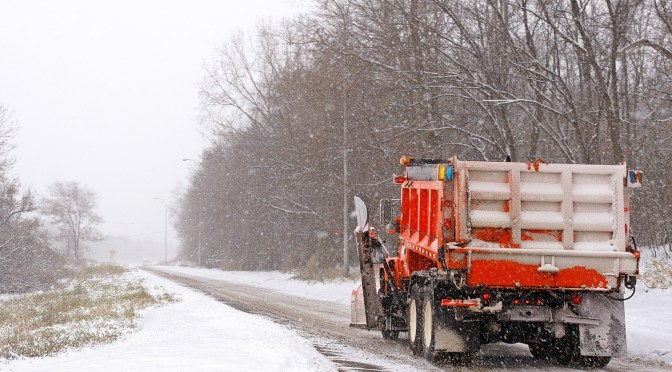
MnDOT uses alternative deicer brines containing potassium chloride, magnesium chloride and calcium chloride for winter road maintenance. The alternatives are more effective in melting roadway ice than sodium chloride alone when temperatures are below 15 degrees Fahrenheit.
Phase diagrams show the relationship between deicer concentrations and temperature to illustrate the ice melting capacity of a product. To date, phase diagrams have not been developed for the alternative deicers MnDOT uses. Instead, winter maintenance operators use past experience or vendor recommendations to choose an alternative deicer and determine the timing of the application and the optimal concentration of deicing materials.
Science-based information identifying temperatures at which alternative products will melt ice efficiently will enable MnDOT to make the right decisions when temperatures drop to keep winter roads as safe as possible without material waste.
“This research will enhance MnDOT’s ability to provide winter roadway safety while minimizing the environmental impact,” said Thomas Peters, research engineer, MnDOT Office of Maintenance. “In addition to reductions in chloride use, winter road maintenance in extra cold conditions will be improved.”
Objectives
In a new project, researchers will develop a phase diagram illustrating the ice melting capacity, down to negative 20 degrees Fahrenheit, of MnDOT’s most used alternative deicer at six different concentration levels. Testing will be carried out using a specially built cold chamber.
The objectives are:
- Quantify the melting curve, eutectic point—the lowest temperature at which the deicer at any concentration can melt ice—and the solubility curve of six deicer mixtures
- Quantify the ice melting capacity of six deicer mixtures
- Field-test melting performance of three mixtures, including comparing rates of deicing, at an on-pavement testing facility under actual winter conditions
Project Details
- Estimated Start Date: 07/01/2024
- Estimated Completion Date: 11/20/2025
- Funding: LRRB
- Principal Investigator: Stephen Druschel
- Technical Liaison: Thomas Peters
Details of the research study work plan and timeline are subject to change.
To receive email updates about this project, visit MnDOT’s Office of Research & Innovation to subscribe.
 Crossroads