
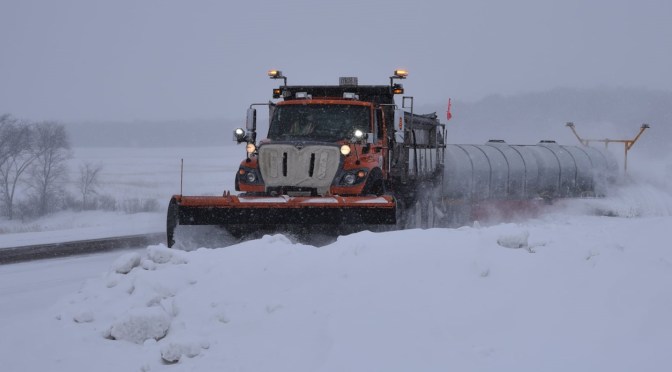
Snowplows use substantial amounts of fuel to keep Minnesota’s winter roads safe and accessible. Reducing the fuel consumed by MnDOT’s snowplows will help the agency meet its sustainability goals and lower operating costs. In a recent study, data collected from onboard vehicle technology showed the impacts of idling and snowfall on fuel efficiency to inform the management of the agency’s snowplow fleet.
MnDOT spends over $2 million on diesel fuel annually for plowing operations. In addition to cost savings, reducing vehicle fuel consumption would help MnDOT meet its sustainability goal to achieve a 30% reduction in greenhouse gases (GHG) from 2005 levels by 2025. The transportation sector generally accounts for one-third of total GHG emissions, and medium- and heavy-duty trucks account for a large portion.
Many factors affect the amount of fuel that snowplows use, including the time snowplows spend idling and the amount of snow that plows must drive through. Mobile data collection technology is installed in 600 MnDOT plows. High-fidelity data is collected in real time on parameters such as a truck’s location, route and speed; weather and road conditions; materials usage; and fuel rate. The data is integrated into the agency’s maintenance decision and support system (MDSS) and used to help manage winter maintenance operations.
“This project gave us confidence that we have the right technology and data to help analyze fuel consumption hot spots, snow trap areas and salt use. The mobile data collection tools, when combined with other systems and technologies, can help in achieving our strategic goals,” said Joseph Huneke, transportation program supervisor, MnDOT Office of Fleet Equipment and Contracts.
MDSS provides so much data on plow operations, however, that maximizing the use of the database is challenging. MnDOT was interested in exploring historical snowplow data related to fuel consumption variables, including idling, snow cover and elevation. Understanding where and when high fuel usage occurs can inform strategies such as routing changes and the placement of snow fences that could reduce vehicle fuel consumption and lower operating costs.
What Was Our Goal?
The goal of this project was to investigate the impact of idling and snowfall on snowplow fuel consumption by mining and analyzing vehicle onboard diagnostic data.
What Did We Do?
A project database of snowplow data was created using information gathered from the 2018 to 2022 winter seasons, with the majority of data coming from the past two winters.
For the idling analysis, “idling” was defined as three or more minutes during which a plow remained motionless. Using GPS coordinates, engine rpm and fuel rates from vehicles that met certain quality parameters, researchers analyzed the frequency (number of idle events), length of vehicle idling and location of idling events.
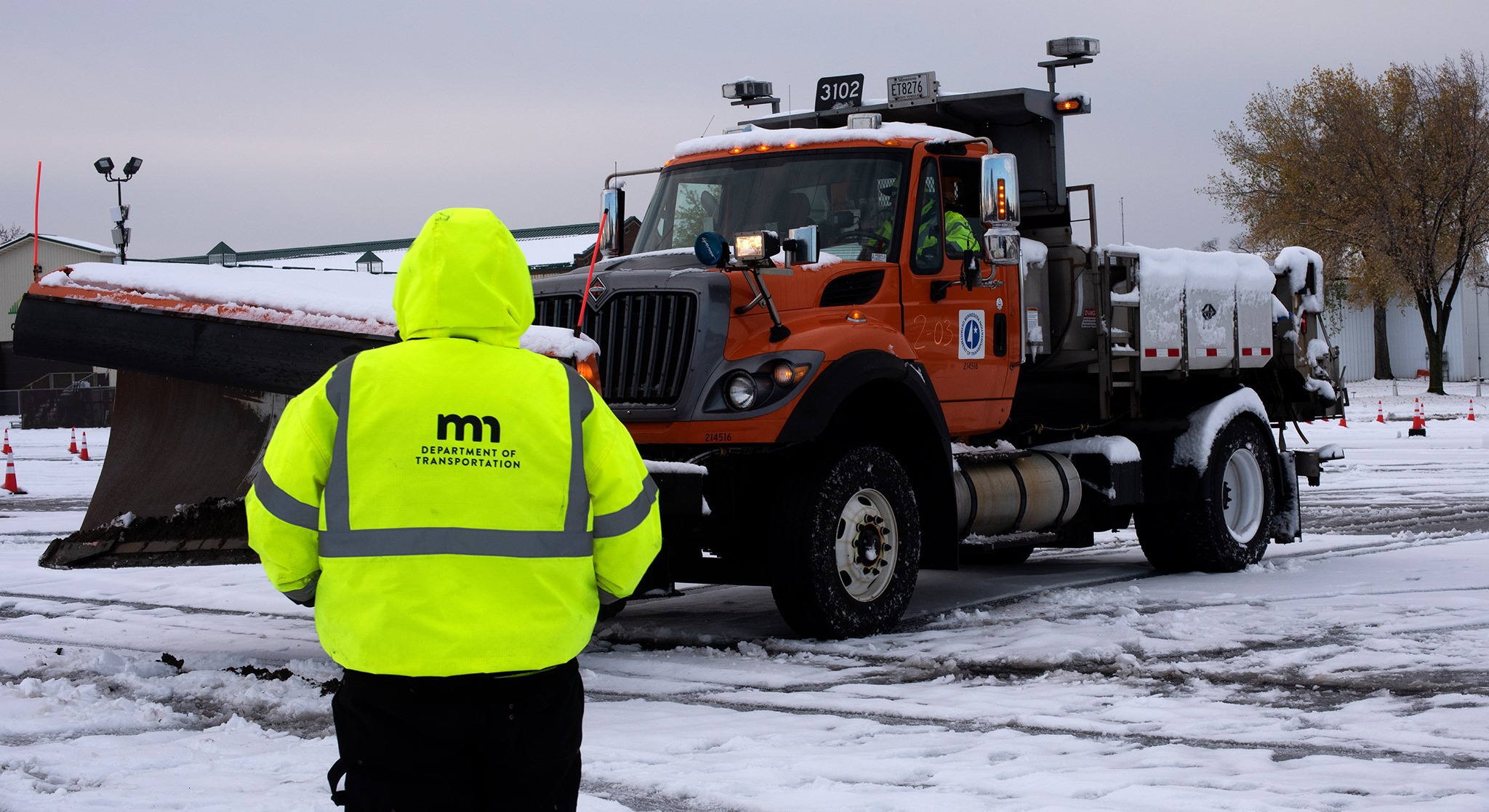
They also reviewed the relationship between activity—distance traveled, overall run time and fuel consumption—and idling. Even with a fair amount of vehicle data excluded for failing to meet quality parameters, 978 vehicles with over 232,000 hours of usable data were processed and analyzed.
A comprehensive energy analysis determined the impact of snowfall on fuel consumption. Statistical algorithms were used to analyze 41 plows and historical weather data from the 2020-2021 season. Snowplow data was gathered from 4,300 trips and included vehicle make, model and year; GPS position; and fuel rate. Additionally, velocity and elevation data were used to determine road resistance and the energy needed to propel a snowplow forward, which is relevant to fuel usage.
After removing data from trips that weren’t representative of normal snowplow operations, investigators created a model to analyze trip data for dry days when there was no snowfall and to estimate fuel use on snowfall days. The difference in fuel economy between dry and snowfall days indicated the impact snowfall had on fuel consumption.
What Did We Learn?
The vehicle data processed for the idling analysis included nearly 280,000 idling events totaling over 52,000 hours—almost one-quarter of the total time plows were active. The median idle time was over six minutes, with over 90,000 events over nine minutes long. Additionally, out of the 1.2 million gallons of fuel used during the analysis period, over 50,000 gallons were used while idling.
“These results give MnDOT additional motivation for snow mitigation strategies. Snow fences, for example, don’t just reduce the need for plowing. They can improve snowplow fuel economy by minimizing the snow depth through which the plow drives,” said Will Northrop, professor, University of Minnesota Department of Mechanical Engineering.
The energy analysis indicated a significant difference in estimated fuel consumption between dry days and snow days. On days with a snowfall of 4 or more inches, fuel use increased 29% on average compared to dry days.
Though researchers lacked data on actual vehicle mass, plow positioning, on-road snow depth and other attributes that would have informed the fuel consumption estimation, the method they developed could be used for exploring other operational questions regarding variables that impact fuel consumption.
What’s Next?
MnDOT is continually seeking ways to reduce snowplow idling, particularly at agency garages, and fuel consumption. While no additional research is currently planned, the agency is interested in integrating multiple data sources to inform the management of efficient and cost-effective snowplow operations.
 Crossroads
Thanks for this insightful article on reducing snowplow fuel consumption through data-driven strategies. It is interesting to see how advanced data analytics can help identify fuel consumption patterns, optimize ice mitigation techniques, and contribute to sustainability efforts. The integration of real-time vehicle diagnostics with decision-support systems demonstrates the true power of analytics in operational efficiency. Looking forward to more research and innovation in this area.