

Pedestrian safety countermeasures near roadways require year-round maintenance to be effective. Clearing snow and ice has not generally been a design consideration for safety treatments, but new research has identified specific design criteria to help MnDOT and other agencies keep walkways clear without impeding maintenance efforts.
Pedestrian fatalities make up almost 14% of traffic fatalities in Minnesota. While MnDOT continues to prioritize pedestrian safety, maintaining certain safety countermeasures can present challenges, particularly in winter.
Keeping walkways, curb ramps, median refuge islands and other features safe requires keeping them free from snow and ice. Snowplows, however, may have difficulty navigating around pedestrian safety treatments, and snow may pile up in these areas. Agencies may need additional equipment to clear walkways and other areas. Whether adjacent property owners or public works agencies are responsible for keeping the pedestrian–roadway interface clear is also not always well established.
“These project results have great potential to unearth needed improvements to our infrastructure design standards to benefit both pedestrian safety and winter maintenance effectiveness,” said Timothy Mitchell, assistant director, MnDOT Office of Transit and Active Transportation.
Little research exists that explicitly considers the year-round maintenance needs of pedestrian safety countermeasures. To ensure that pedestrian treatment designs consider winter maintenance issues, MnDOT sought guidance and options for designing, installing and maintaining cost-effective year-round safety measures.
What Was Our Goal?
The goal of this project was to identify best practices for designing pedestrian safety countermeasures that will reduce the risks of crashes and other incidents, are maintainable year-round and are compatible with effective winter maintenance operations.
What Did We Do?
A Technical Advisory Panel—including staff from MnDOT traffic safety and winter maintenance programs and from local government public works and transportation agencies—identified seven pedestrian countermeasures of interest: curb ramps, crosswalk markings, smaller corner radii, curb extensions, refuge islands, speed humps and raised crosswalks. Researchers then reviewed existing literature, federal guidance and other state and international policies and procedures for current best practices, focusing on design characteristics and how winter maintenance was factored into the design of the identified countermeasures.
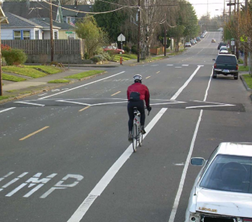
Interviews with maintenance professionals from Minnesota local agencies, a state department of transportation and four local agencies in Iowa, Wisconsin and Wyoming explored winter maintenance issues surrounding pedestrian safety measure designs. Best practice case studies described strategies used by four jurisdictions: Wilmar and Bloomington, Minnesota; Milwaukee, Wisconsin; and Winnipeg, Manitoba. The case studies identified pedestrian safety practices and winter maintenance challenges in commercial, residential and public areas; responsibilities of municipalities and property owners; and design, equipment and operational considerations.
Finally, investigators compiled best practices for pedestrian access designs, some of which are already subject to Americans with Disabilities Act requirements, that are maintainable during the winter without impeding winter maintenance operations.
What Did We Learn?
In general, researchers confirmed the lack of policies or documentation for pedestrian safety measure designs that facilitate year-round maintenance. Some agency policies and plans cover responsibilities. Clearing curb ramps and sidewalks, for example, is usually the responsibility of the adjacent property owner. Responsibility for areas like median refuge islands and other walkways, however, is often ambiguous.
“This research highlighted the need to consider maintenance implications when designing safe pedestrian infrastructure near roadways, and the results provide a solid starting point,” said David Veneziano, research scientist, Iowa State University Institute for Transportation.
Based on lessons learned from other agencies about best practices and challenges in maintaining pedestrian–roadway interfaces, researchers developed numerous recommendations, including:
- Discuss design plans for pedestrian safety features with maintenance personnel early in the process.
- Incorporate dedicated snow storage locations and hauling capacity into the design, if needed.
- Carefully consider the durability of decorative or other features used for visual appeal.
- Ensure sufficient maintenance staff resources and establish hierarchies of snow and ice removal priorities for pedestrian facilities.
- Clarify and codify responsibilities and time frames for winter maintenance of pedestrian safety features.
Additionally, researchers provided design recommendations for each of the seven safety treatments identified. Longer-lasting materials, despite the higher initial costs, can increase the durability and decrease the maintenance needs of safety features, including curb ramps and crosswalk markings. Similarly, investigators recommended high-strength concrete for curb extensions. Adequate drainage around safety countermeasures such as median refuge islands and curb ramps can prevent ice buildup. Certain sizes, dimensions and shapes make pedestrian features such as curb extensions, median islands and speed humps more effective and maintainable.
Lastly, researchers presented trade-offs between safety and maintainability for each safety feature design, including safety benefits, winter maintenance costs and general costs.
What’s Next?
MnDOT will consider prioritizing potential changes to design standards and associated policies and procedures. Lead engineers tasked with the review will collaborate with staff from winter maintenance and other programs to ensure any revised designs are maintainable year-round. The agency may also consider disseminating project results to local agencies throughout the state. Even before implementing any design changes, municipalities can clarify responsibilities for keeping the pedestrian–roadway interfaces clear of snow and ice.
 Crossroads
They should be designed not to impede bicyclists using bicycle lane or shoulder by forcing them into the travel lane.