
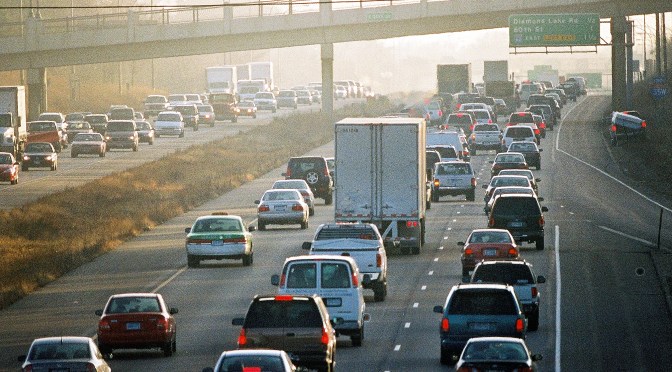
Combining real-time traffic data, vehicle trajectories and computer algorithms allows queue warning systems to trigger traffic warnings on overhead message signs that alert drivers to congestion or crashes ahead. A recent study evaluated the warning system previously installed on a segment of Interstate 94 (I-94) and deployed the system in a second location, providing an improved understanding of its efficacy and considerations for expanding its use.
MnDOT has been investigating expanded uses for active traffic management (ATM) technology for many years, including addressing congestion impacts to improve safety and mobility. Vehicle queueing (or coming to a standstill on the highway) and shockwaves (a sudden change in traffic that causes a cascade of braking) can result in an increased risk of crashes.
Queue warning systems use vehicle sensors, other detection systems and algorithms to determine the presence of downstream congestion or crash-prone conditions and warn drivers of these conditions on overhead dynamic message signs. Drivers are then more likely to expect slowing traffic, hard braking or other erratic traffic flow, which may reduce the crash risk.
“This work showed a queue warning system, operating through our existing ATM infrastructure, can be effective in reducing crashes and near-crashes, and could be transferrable to other locations,” said Garrett Schreiner, freeway operations engineer, MnDOT Metro District.
In previous research, investigators developed and deployed two warning systems, including MN-QWARN, which was installed on a segment of I-94 with a historically high crash rate. This system targeted shockwaves or initial stages of congestion based on the understanding that not all congestion events create high risks for crashes. Certain traffic conditions can be unsafe even if they don’t result in queueing. A brief evaluation of MN-QWARN, which has been operating since 2016, suggested that the warning system reduced crashes by 22%.
Seeing the opportunity to leverage the historical traffic data on that highway segment, MnDOT was interested in learning more about the performance of MN-QWARN and the transferability of the queue warning system.
What Was Our Goal?
The goal of this project was to evaluate the performance of the previously installed MN-QWARN system and deploy it in a second location.
What Did We Do?
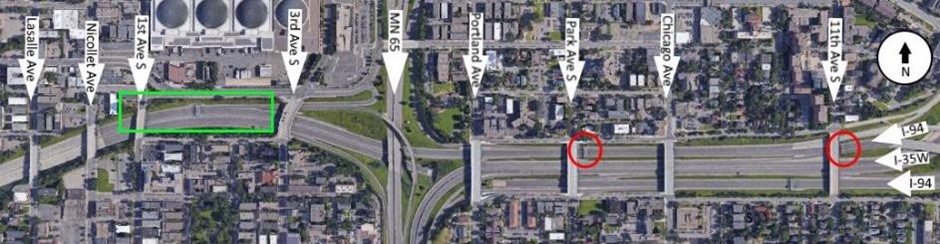
The project began with an evaluation of data collected from June 2016 to August 2018 in the corridor segment where MN-QWARN was installed. The system is operated through the Minnesota Traffic Observatory communication network. Continuous monitoring and vehicle data collection from in-pavement loop detectors and surveillance cameras allowed investigators to understand traffic conditions before, during and after crash events.
An examination of video data from the two-year period provided insight into the system’s performance. Crashes and near-crashes were tabulated based on whether the algorithm detected the events and issued warnings to drivers.
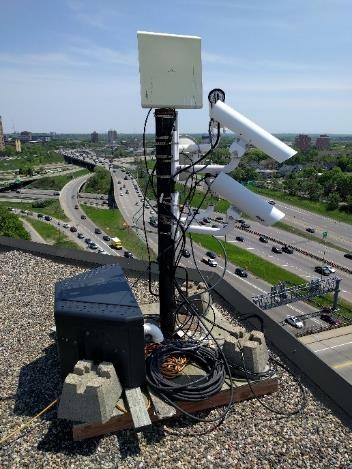
MN-QWARN was then installed at a second location upstream from the original corridor to test its transferability. Supporting infrastructure at the site was upgraded and repaired before the system was installed. A four-year construction project at the location was expected to change congestion patterns on this stretch of highway. After deploying MN-QWARN, researchers determined the left and right lanes experienced very different traffic flow conditions, so they implemented a separate instance of the system for each lane.
Several years of crash data would have been necessary to draw strong observational conclusions about the system’s performance. To obtain a more immediate assessment, researchers developed a data-driven methodology that consistently identified dangerous traffic conditions. The method, which included a new way to estimate hypothetical vehicle trajectories, speed and deceleration rates from the data previously collected, enabled them to quantify the efficacy of the algorithm.
What Did We Learn?
While drivers are more likely to recognize shockwaves before they enter them, areas within the shockwave where drivers are rapidly slowing down are considered critical zones for dangerous traffic conditions. Once drivers enter a critical zone (i.e., a section where visibility is poor), inattentive drivers are likely to decelerate rapidly and crash risks increase.
“The methodology we developed for evaluating MN-QWARN provides a finer resolution of traffic conditions and when a warning should be raised. It can also be used to calibrate the system for other locations,” said John Hourdos, director, Minnesota Traffic Observatory, University of Minnesota.
An evaluation of the historical data gathered from the previously installed MN-QWARN system showed that crashes decreased 56% and near-crashes decreased 69%. On average, the algorithm detected crashes and near-crashes 65% of the time. The system provided warnings to drivers involved in the events approximately 34% of the time. An examination of each crash event found that almost half of the crashes with no warning raised occurred during heavy congestion with slow speeds, which was defined as a non-crash-prone condition.
The evaluation of the MN-QWARN system installed in this project produced mixed results. The right lane model’s algorithm detected dangerous traffic conditions 25% of the time and issued warnings when none were warranted 36% of the time. The left lane model had a detection rate of 64% and a false alarm rate of 23%. The false alarms were largely due to the warnings ending too late, as the algorithms predict the beginning of a dangerous traffic zone more reliably than the end.
What’s Next?
The queue warning system evaluated and expanded in this project is integrated with the MnDOT Regional Traffic Management Center’s Intelligent Roadway Information System and uses existing ATM sensors and other infrastructure. System data are stored for future analyses. There are several other highway locations where drivers could benefit from warnings of crash-prone conditions. Exploring how to locate message signs in the appropriate places for effective warnings will be necessary to expand system implementation.
 Crossroads