

Stormwater ponds and wetlands reduce flood risk and keep pollutants from entering other bodies of water. As ponds age and change, however, they may not perform as designed. Local agencies now have tools to assess whether a pond is likely to retain phosphorus, which can help guide stormwater management efforts.
Constructed stormwater retention ponds, natural ponds and wetlands help reduce flood risk, slow stormwater runoff and retain pollutants that would otherwise drain into Minnesota’s lakes and streams. Phosphorus is a pollutant of primary concern, dissolving into phosphates that cause unhealthy algal blooms, excessive plant growth and other water quality impairments that impact the color, odor and taste of water.
Ponds act as sinks to trap phosphorus from fertilizers, degrading organic matter, animal waste and other sources found in stormwater runoff and store it in a pond’s sediment. As ponds age, however, they may become shallower, and more vegetation may cover the surface. Previous studies have shown that many older ponds in Minnesota are releasing phosphorus from the bottom sediment into streams and lakes.
“We developed an easy-to-use tool to help agencies assess whether ponds have a likelihood of releasing phosphorus. The tool, together with past research on best management practices, will help LRRB agencies better manage their stormwater ponds,” said John Gulliver, professor, University of Minnesota Department of Civil Engineering.
Thousands of these ponds are managed by local transportation agencies. While a previous project assessed different management strategies to improve phosphorus retention in ponds, the Local Road Research Board (LRRB) wanted more guidance on evaluating ponds to prioritize agency efforts in managing stormwater.
What Was Our Goal?
This project’s goals were to understand the features or characteristics of ponds that impact their ability to retain phosphorus and then develop practical tools and recommendations for management practices.
What Did We Do?
Whether constructed stormwater ponds or natural wetlands control and filter stormwater determines what regulations apply to managing the small water bodies. The project’s Technical Advisory Panel assisted in clarifying definitions and classifying various ponds and wetlands so these waters are consistently assessed and maintained as part of the stormwater system, or managed as part of the natural surface water system.
Expanding on previous research that evaluated 15 ponds (both natural waters and purpose-built infrastructure), researchers worked over two field seasons to further develop correlations between pond characteristics and phosphorus release. The differences between ponds with open water and little shoreline vegetation and ponds with substantial vegetation on or around them were of particular interest.
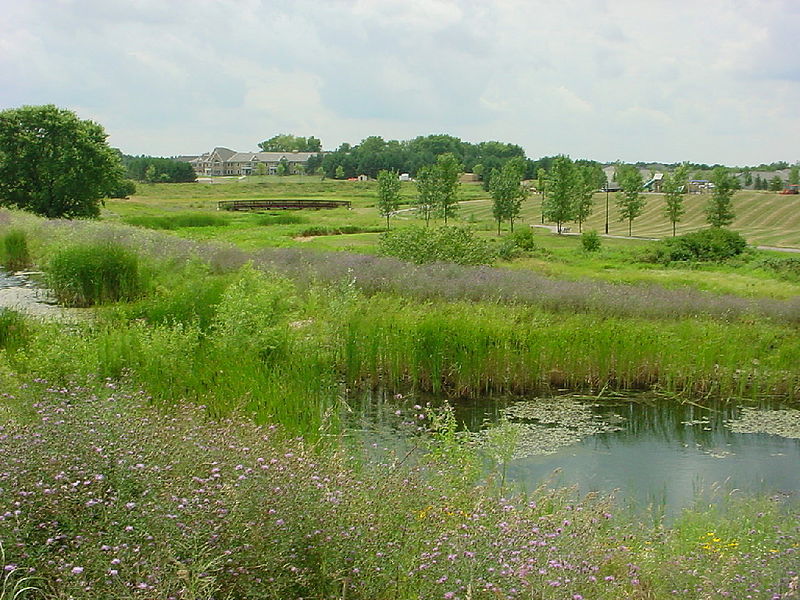
In the first year, water quality was monitored in six ponds with a range of characteristics, including vegetation, water depth and tree cover. Monitoring identified phosphorus levels; dissolved oxygen, which is necessary for aquatic life; and other parameters. Five of the six ponds underwent intensive monitoring in the second year, including biweekly sampling and continuous monitoring of temperature profiles, conductivity and wind measurements over the pond to assess stratification, or how well the water was mixing. A laboratory analysis of sediment cores from five ponds identified the relationship between sediment chemistry and risk factors for phosphorus release.
Finally, an exploration of pond characteristics and approximately 15 years of water quality data from about 230 ponds in the Twin Cities metro area further revealed relationships among factors that lead to phosphorus release.
What Did We Learn?
Sampling and monitoring revealed the complex nature of ponds and the effects of many variables, including climate, surrounding land use and soils, pond characteristics and tree canopy. Vegetation on or around many ponds prevented wind from moving and mixing the water, which increased anoxic conditions in and near the sediment. Anoxic environments lack sufficient oxygen, which may cause phosphorus release.
“This project clarifies pond classifications to help guide management strategies. The pond assessment tool will support prioritizing ponds that need attention to improve phosphorus retention and guide a more in-depth pond assessment,” said Ross Bintner, engineering services manager, City of Edina Public Works.
The meta-analysis of pond data revealed broad patterns of indicators and factors important to levels of phosphorus in ponds. The results of this analysis, together with the field data, laboratory analyses and past research, enabled the development of the pond assessment tool. The tool will allow managers to assess the risk or concentration of phosphorus in pond water, oxygen status and potential for phosphorus release from pond sediment. Inputs to the tool may range from pond plan drawings, photographs and other basic site data to sampling and monitoring data. Models can then predict the phosphorus risk indicators based on the data and understanding of the chemical and biological processes.
Two resources were created to support the use of the pond assessment tool: a tutorial that illustrates its use and guidelines for data collection. Another document details pond and wetlands classifications and regulatory contexts for managing various bodies of water. Investigators also suggested updates to various stormwater guidance documents.
What’s Next?
Local agencies can use the pond assessment tool immediately for classifying, prioritizing and managing their stormwater ponds. As other drivers of a pond’s capability to retain phosphorus become known, the tool’s models can be refined. How the pond or wetlands fit into water flow throughout the larger watershed, for example, impacts how much phosphorus is released from the pond and its trajectory through other water bodies.
 Crossroads
It was interesting to me when you explained that stormwater ponds act as sinks to trap phosphorus from fertilizers. I would imagine that stormwater ponds need to be installed in locations that are below the main elevation of the area. Having the pond lower in elevation seems like a good way to make sure that the water is flowing into it.