
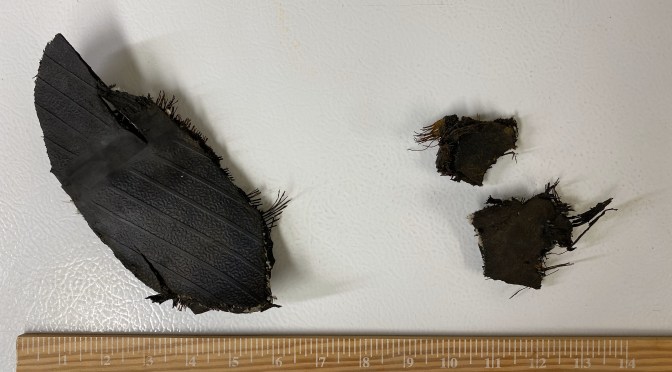
Repurposing old tires as tire-derived aggregate (TDA) is a stormwater management practice that could retain phosphate in underground treatment systems and prevent it from reaching the soil, surface waters and groundwater. However, chemicals from the TDA may leach into the soil and water sources. This project identifies the environmental impacts and cost-effectiveness of deploying TDA to manage stormwater in Minnesota cities and counties.
Identifying productive uses for discarded tires as a building and construction material instead of disposing of them in landfills has fiscal and environmental benefits. Research has indicated that when used as a medium to manage stormwater, TDA effectively removes environmentally dangerous phosphate from stormwater runoff, but other heavy metals such as zinc and copper may leach from the material.
For city and county engineers to better understand the environmental effects and cost savings of using TDA, investigators analyzed whether TDA adsorbs phosphate and if biofilm present on traditional TDA (Trad-TDA) and wire-exposed TDA (WE-TDA) captures and retains heavy metals leached from the tire material.
What Did We Do?
Samples of TDA and river water were placed in 26 buckets for 72 hours. Then the water was drained from the buckets, and the samples were allowed to dry. This wet-dry cycle was repeated for 13 cycles. Next, the TDA in the buckets was kept dry for 24 days to simulate drought conditions and examine the effects of drought on biofilm viability.
“The use of TDA as a stormwater management tool is a practical option for Minnesota cities and counties, but further study will help maximize its use,” said Mark Hansen, engineer, City of Coon Rapids.
After four flush cycles, biofilm scraped from the TDA surface was analyzed. After the last flush, the buckets remained dry for two months to further examine the effect of an extended dry period on biofilm growth. The level of volatile solids present on the area scraped for analysis was used to measure biofilm growth.
Further analysis examined TDA adsorption of per- and polyfluoroalkyl substances (PFAS) and the likelihood of TDA releasing PFAS by combining TDA and water in tubes that were shaken for three to five days. Subsequent analysis of the water indicated adsorption abilities and PFAS released by the TDA. Investigators also calculated the fiscal benefits of using TDA in stormwater management in place of disposal.
What Did We Learn?
Laboratory results indicated that TDA can effectively retain phosphate for approximately eight to nine years in the upper Midwest.
The WE-TDA retained phosphate better than the Trad-TDA tested, but not substantially. Biofilm flushed by river water grew effectively on the TDA and will prevent most zinc, copper and iron from leaching. Zinc levels were below the U.S. Environmental Protection Agency’s (EPA’s) chronic toxicity criteria after one flush, iron levels were below the criteria after one to seven flushes, and copper released from TDA did not exceed chronic toxicity criteria. Further, the dry period did not cause a total loss of biofilm, indicating that TDA could be used in biofilters. TDA released a measurable amount of PFAS, but concentrations were relatively low and were similar to concentrations typically found in urban and residential areas.
Installing TDA for stormwater management rather than disposing of it can reduce the lifetime costs of the material and add value of $273 per ton. Disposing of 1 ton of tires at a licensed disposal site in the Twin Cities metropolitan area would cost approximately $240. Tires manufactured and sold as TDA would currently generate approximately $33 per ton for the manufacturer.
What’s Next?
Currently an iron-enhanced sand filter is used to remove phosphate from stormwater runoff in Minnesota, but this method has design, space and cost challenges. TDA can remove phosphate in underground treatment systems and other locations where surface treatment is not practical or cost-effective.
Before including TDA deployment strategies in stormwater management guidance, more performance information must be collected over a longer period and at more locations.
Additionally, testing to measure the release of 6PPD-quinone, a potentially dangerous chemical for salmonoid fish like trout that is found in tires, is now possible using new EPA testing protocols. These test results will help Minnesota cities and counties make informed decisions on the future use of TDA.
 Crossroads