
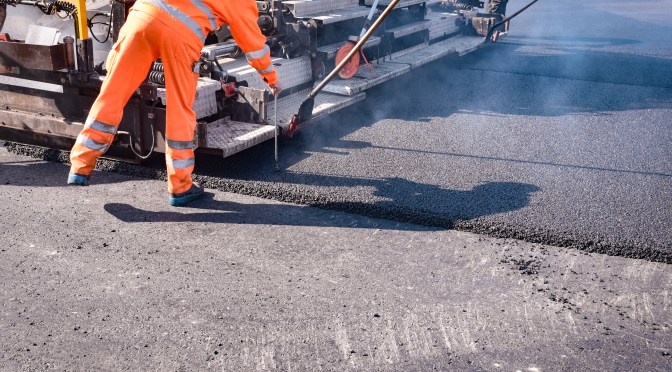
Pavement durability depends on its density. Achieving adequate density depends on the size of the aggregate in the mixture and the asphalt lift thickness—the height of the asphalt layer that is applied by the paver and compacted.
In general, a thicker asphalt lift can be denser and more sustainable. If the asphalt layer is too thick, however, the bottom of the lift will not be sufficiently compacted. An increase in asphalt lift thickness is also correlated with an increase in initial surface roughness.
Determining appropriate asphalt lift thicknesses for different aggregate grades and understanding the factors that lead to surface roughness will improve pavement designs. Pavements with higher asphalt lift thicknesses are more durable and more cost-effective to construct and maintain.
“The research is needed to improve our understanding of the implications of asphalt lift thicknesses, including on the compaction process,” said Bruce Hasbargen, highway engineer, Beltrami County. “The ability to produce more durable pavements is vitally important to local agencies with limited budgets.”
Objectives
In a new project, researchers will use a recently developed approach to asphalt compaction to explore the relationship between asphalt lift thickness, density and surface roughness to inform the design of durable, cost-effective asphalt mixes.
The objectives are:
- Evaluate past efforts using higher lift thicknesses in asphalt pavements
- Analyze relevant compaction and mechanical properties of asphalt mixtures
- Develop a model to understand layer thickness, density and surface roughness
- Perform cost-benefit analysis to determine if using higher lift thickness in asphalt paving can reduce overall costs
Project Details
- Estimated Start Date: 07/01/2024
- Estimated Completion Date: 04/30/2026
- Funding: LRRB
- Principal Investigator: Mihai Marasteanu
- Co-Principal Investigators: Jia-Liang Le
- Technical Liaison: Bruce Hasbargen
Details of the research study work plan and timeline are subject to change.
To receive email updates about this project, visit MnDOT’s Office of Research & Innovation to subscribe.
 Crossroads