
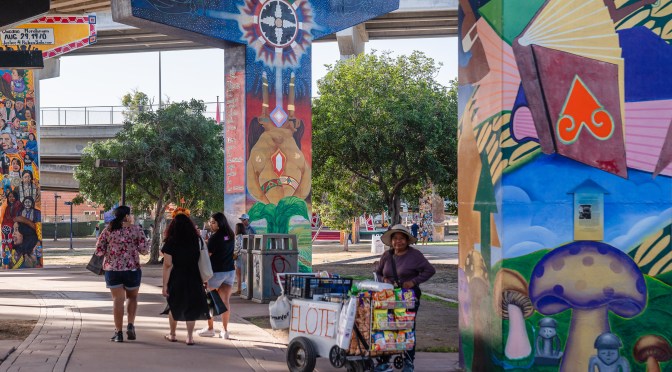
Historically, transportation projects have had a disproportionately negative effect on BIPOC (Black, Indigenous and people of color) and low-income communities. Today, state departments of transportation (DOTs) may be able to mitigate these negative effects by reaching out to these communities and incorporating their ideas and feedback into transportation planning. Local artists and culture bearers could serve as ambassadors for these communities by participating in the transportation planning process based on their creative placemaking ideas and connection to the community.
Using artists and culture bearers as active planning participants and community liaisons provides transportation planners creative design input that can mitigate negative impacts, while offering transparency during the planning process and building trust with communities. However, while transportation agencies have used this approach successfully, there is a lack of guidance and documentation to consult for implementing this strategy in future projects. Additionally, policy goals have not been established for this type of community involvement, and transportation planning at MnDOT has typically not involved this level of outreach.
MnDOT wanted to explore and better understand the processes and elements needed to successfully involve these communities through arts and culture, and to begin to develop guidance for transportation agencies to consult.
What Did We Do?
This project primarily focused on conducting case studies of programs or projects that successfully engaged disadvantaged communities to determine how transportation agencies can effectively incorporate arts and culture into the planning process of infrastructure projects. To provide a framework for the case study analysis, researchers examined how arts and culture is defined in planning and community engagement literature. Additionally, interviews with MnDOT representatives helped investigators better understand the processes MnDOT uses for infrastructure projects.
Selected case studies represented projects that included:
- An artist’s participation in the planning process.
- A broad range of arts and cultural strategies.
- Consideration of equity issues.
- DOT involvement.
- Differing geographic locations in the United States.
Case study analysis included researching project details and archival information; interviewing transportation agencies, community partners and artists; mapping project locations; and obtaining images of each project.
The project classified case study outcomes by characterizing the lessons learned as lessons internal to transportation agencies, lessons regarding cooperation between transportation agencies and the community, and lessons for better understanding the use of arts and culture for these projects.
What Was the Result?
The case studies provided valuable information and lessons regarding arts and culture partnerships. For example, the Barrio Logan community in San Diego was negatively impacted by significant highway and bridge construction in the 1960s and 1970s. The community formed a neighborhood group and advocated to ensure Chicano Park was developed on land beneath the massive highway bridge ramps. Through several decades of shared learning, community activists, artists and California Department of Transportation (Caltrans) officials have successfully collaborated on facilitating financial support to maintain and restore the park and its nationally recognized murals.
“This research provides policy insights to better align MnDOT’s transportation equity vision with efforts to create places that reflect community identity and history,” said Jessica Oh, Strategic Partnerships director, MnDOT Sustainability and Public Health.
Analyses of the case studies recommend actions for implementation. These actions include developing a framework to better document the community engagement process to be able to replicate successful processes, shifting the transportation planning mindset of art from simply an aesthetic outcome to an opportunity to capitalize on the creative and cooperative benefits by incorporating it throughout the entire planning process, providing regular and transparent information to communities throughout the process, and actively seeking artists and culture bearers to serve as creative contributors and liaisons to reach mutually beneficial outcomes for transportation agencies and the community.
Overall, the resources provided indicate benefits that can occur with successful cooperation between transportation agencies and local communities. These benefits may include increased community satisfaction and improved aesthetic outcomes for transportation projects, which may influence economic vitality. In addition, transportation facilities that better reflect community input may be used more for biking and walking, which could reduce greenhouse gas emissions.
What’s Next?
The actions recommended by this project provide opportunities for transportation agencies to engage their communities more effectively during infrastructure projects and realize the benefits that can occur as a result of successful cooperation.
 Crossroads
I’m a firm believer in collaborating early with the local government and the community in the planning and throughout the development of Transportation projects. However, I’m hearing more recently about the unintended consequences of community enhancements incorporated into transportation projects in disadvantaged communities. The enhancements improve the quality of life in the community, which enhances the local economy. Rent increases, and now some residents can no longer afford to live in their community. Land use and transportation planning is a complex process.