
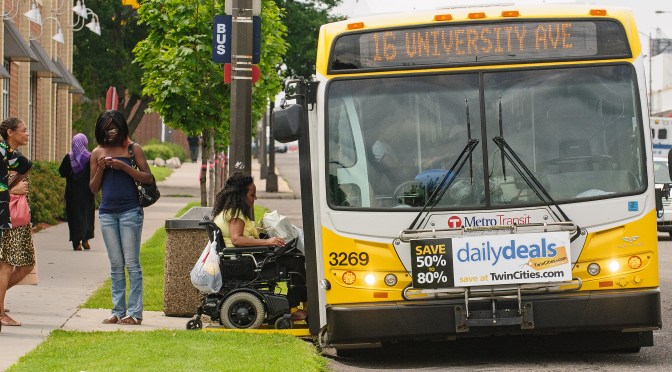
Transportation research is often about numbers. In a recent study, however, U of M researchers looked beyond the data to hear the transportation experiences of real people from underserved communities in Minnesota.
Their project, led by Professor Yingling Fan of the Humphrey School of Public Affairs, was part of the Minnesota Department of Transportation (MnDOT) Advancing Transportation Equity initiative.
“Our new definition of equity acknowledges that the transportation system and agency decisions have underserved, excluded, harmed, and overburdened some communities,” said Lisa Austin, transportation program supervisor of MnDOT’s Center for Community Connections. “The experiences collected through this research are powerful and often heart-wrenching stories of how it feels when you can’t get to the places you need to go.”
Austin, the study’s MnDOT technical liaison, kicked off the Our Transportation, Our Lives event on May 1 in Minneapolis. Six Humphrey School graduate students, each focused on a specific underserved community, presented preliminary findings from the project. Fan began by describing a new way to conceptualize transportation: as a socially constructed entity. “Transportation manifests the societal structures and cultural assumptions that are constructed by the dominant race or culture,” she said. “Therefore, it’s critical to make the perspective of socially marginalized groups—rather than those of the dominant race or culture—the central axis.”
In many underserved communities, Fan continued, the embedded power structure in transportation inhibits people from living a good life—whether that means getting to a job, grocery store, park, or spiritual activity. “Our project illustrates the role transportation plays in people’s lives,” she said.
Powerful Stories
By documenting transportation experiences like these from members of underserved communities, this research sheds light on the human toll of transportation inequity.
“I’m not able to see my family as much because it’s so far. It’s like a 45-minute drive. On the bus, that would be like two or three hours probably.” —A Black woman
“For us to shop for daily needs, I have to walk, and I have to purchase the amount that I can carry it with my hands. The main barrier is mainly you don’t have a footpath available, even if you cross traffic signals there is no proper footpath everywhere.” —A suburban immigrant community member
“There was a time that I went to the [grocery store] and I was with my three-year-old and my car wouldn’t start. We were stuck in the parking lot. I had to pay to get it towed and it was like $900 to get it fixed. I had to apply for a credit card to make payments because I couldn’t pay the $900 up front … I was just really overwhelmed and just upset that I’m in this position and I want to do better.” —A car-dependent single mom
While researching the transportation experiences of Black community members, Samuel Benda saw this reality firsthand. “Lack of transportation to get to employment was an issue for almost all the participants I spoke with,” said Benda, a Humphrey School Master of Public Policy student. “Losing or dropping a job because they couldn’t get there often came at a time in their lives when they really needed a job that pays well.”
For example, a young Black woman he interviewed described her experience waiting for the bus after a 16-hour shift in the winter:
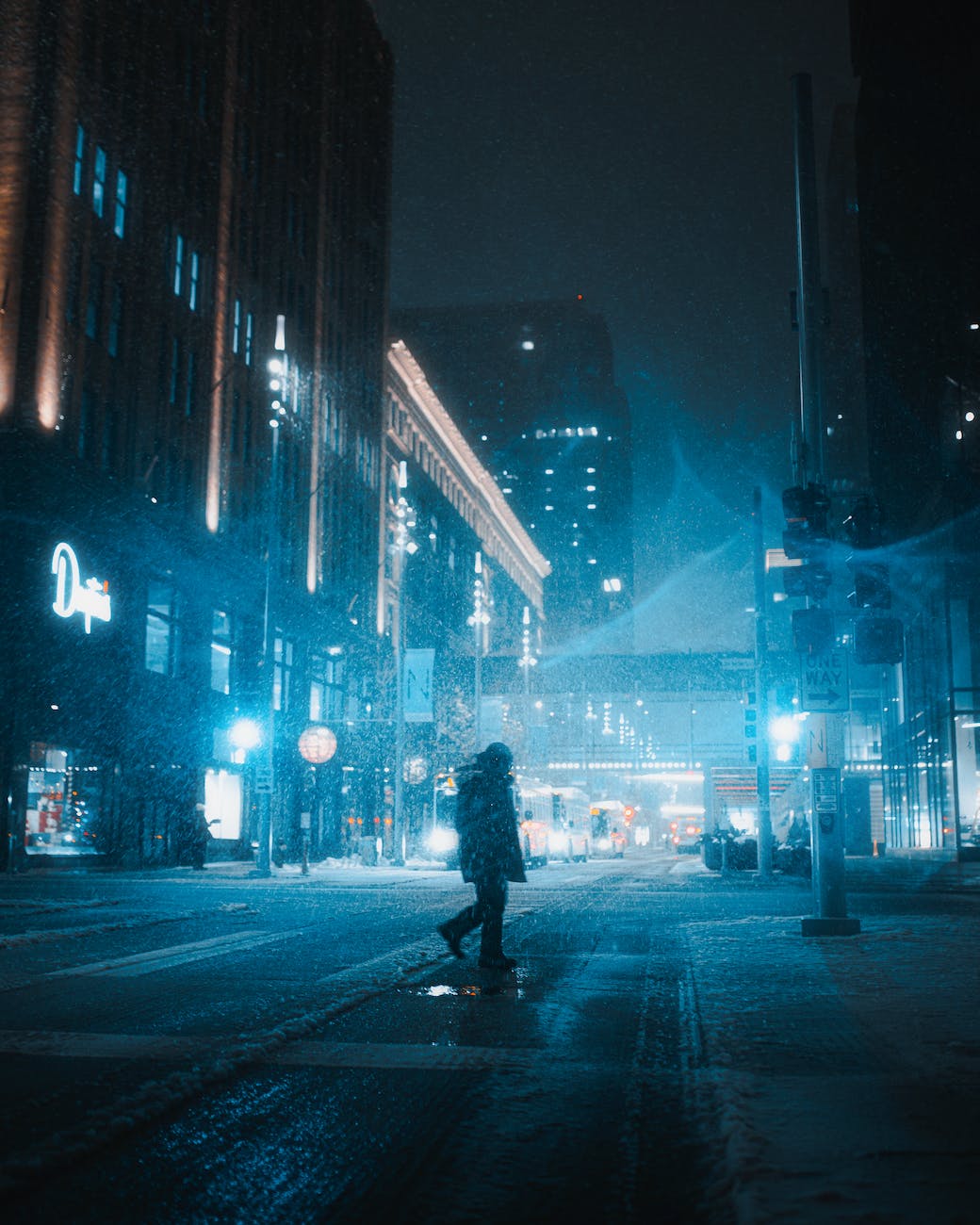
“I was waiting out for the bus and the bus didn’t come for an hour, and it was freezing cold outside and there was snow everywhere and I was so tired.”
Following the presentations on the selected communities, Kelly Her with the Hmong American Partnership and Ezra Kenyanya with the Jeremiah Program (which serves single mothers) discussed their organizations’ participation in the research.
The final research report includes findings and recommendations for four additional communities: Latinx, people with disabilities, the Fergus Falls (rural) community, and single fathers.
MnDOT will use the recommendations and findings from the project in its ongoing efforts to advance transportation equity. The findings are already being used in related training, Austin said.
The study—Improving Transportation Equity for All by Centering the Margins: The Transportation Experience of Underserved Communities—was sponsored by MnDOT and the Minnesota Local Road Research Board; data collection ran from November 2022 to February 2023. The project co-investigator was Ying Song, associate professor in the Department of Geography, Environment & Science.
Adapted from Catalyst June 12, 2023
 Crossroads
I recently located this Webpage and am very encouraged to read about the activities and efforts to make improvements.
I am retired and live in a small rural city in southern Mn. I cannot drive and face transportation limitations on a daily basis.
Although I cannot drive, I am still vibrant and active, but many days leave me restricted to activities that are within walking distance, locally available, or physically reasonable for me to participate in.
I wonder if so much effort on ‘Equity’ is the correct focus. I personally don’t persecuted by any bias – I am frustrated by the lack of transit opportunity. There is very little integration of services – I have limited chance to catch a ride to an urban area where I may hop a bus, catch a taxi or Uber. And, I don’t have a contact to call for help coordinating an integrated effort to plan a day trip.
For example; I’d like to contact an agency that could help find a way to travel to a town for a meeting…a bus ride 1st, then to a taxi, then a conceptual time for a ride hookup that takes me back home. The transit companies involved don’t really matter – as long as they a safe, comfortable and reasonably priced.
I don’t want to worry about crossing county or regional boundaries nor should I be worried about any type of shared costs or revenue sharing for the carriers.
We really need someone to simply make the effort to initiate a system the puts ‘butts in the seat’ and start moving isoltaed people around. It’s a big job, bujt it will never get done until someone actually takes the big 1st step.
You may want to take a look at the two links included below. The Center for Transportation Studies at the University of Minnesota is concentrating on rural transportation needs in 2024. Follow them for more information as the year goes on.
https://www.cts.umn.edu/research/featured/ruralneeds
https://www.cts.umn.edu/news/2024/january/communities